



What's Happening?
Ukrainian forces have intensified their drone strike campaign against Russian logistics and military assets in occupied territories, particularly in Zaporizhia Oblast. According to reports, Ukrainian forces targeted Russian drone control points, workshops,
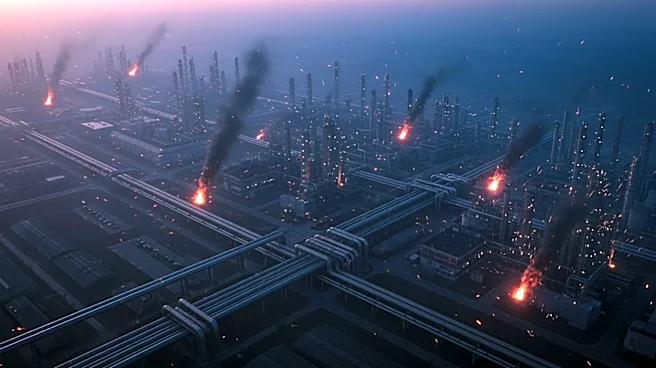
and material warehouses, significantly disrupting Russian supply lines. These strikes are part of a broader strategy to undermine Russian military logistics and fuel supplies. Additionally, Ukrainian forces have targeted key oil export hubs, including the Grushovaya oil depot in Krasnodar Krai, causing significant disruptions. The Ukrainian Air Force reported that Russian forces launched a series of drone strikes against Ukraine, with Ukrainian forces successfully downing a majority of these drones. The ongoing conflict has seen both sides employing drones extensively to gain strategic advantages.
Why It's Important?
The Ukrainian drone strikes are crucial in weakening Russian military capabilities by targeting logistics and supply lines. This strategy aims to create logistical challenges for Russian forces, potentially leading to a reduction in their operational effectiveness. The disruption of fuel supplies and military assets could hinder Russian military operations, providing Ukrainian forces with a tactical advantage. The use of drones highlights the evolving nature of warfare, where technology plays a significant role in shaping battlefield dynamics. The conflict's impact extends beyond the immediate military implications, affecting regional stability and international relations, particularly with NATO's involvement in monitoring airspace violations.
What's Next?
As the conflict continues, both Ukrainian and Russian forces are likely to intensify their use of drones for reconnaissance and strikes. The ongoing disruption of Russian logistics could lead to further strategic withdrawals or redeployments by Russian forces. NATO's involvement in downing a drone over Latvia indicates increased vigilance and potential for further international incidents. The situation remains fluid, with potential for escalation if either side seeks to gain a decisive advantage. Continued international diplomatic efforts may be necessary to address the broader implications of the conflict and seek a resolution.
Beyond the Headlines
The use of drones in the conflict underscores the ethical and legal challenges associated with modern warfare. The ability to conduct strikes remotely raises questions about accountability and the potential for collateral damage. Additionally, the conflict highlights the geopolitical tensions between Russia and NATO, with incidents like the drone downing over Latvia potentially straining relations further. The situation also reflects the broader struggle for influence in Eastern Europe, with implications for regional security and international diplomacy.