



What's Happening?
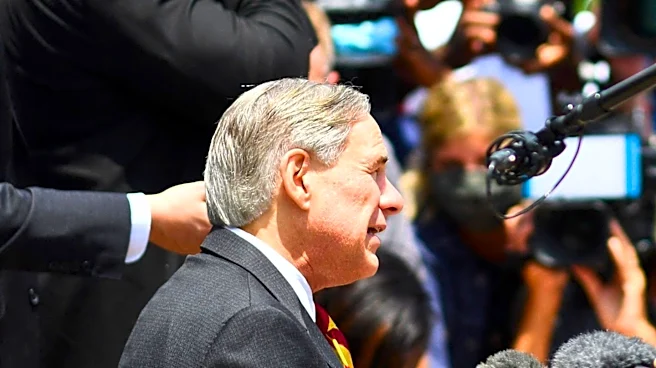
Texas Governor Greg Abbott has initiated a review of state grants allocated to George Bush Intercontinental Airport (IAH) and Dallas-Fort Worth International Airport (DFW). The governor is considering revoking active grants or denying future funding due
to concerns that religious accommodations, specifically Islamic washing facilities (ablution rooms), may violate state and federal nondiscrimination laws. Abbott argues that these facilities appear to single out one religious group for special treatment, which he deems illegal. He has also referred both airports to the U.S. Department of Transportation for investigation. While DFW Airport has decided not to proceed with plans for additional ablution stations following the controversy, IAH already has an operational ablution room and an adjoining prayer room, opened in February 2024, as part of an international expansion program. The City of Houston states that this facility was funded by fees from international airlines, not taxpayer money or state/federal grants, and is open to all travelers regardless of faith.
Why It's Important?
This action by Governor Abbott highlights a significant debate regarding religious accommodations in public spaces and the interpretation of nondiscrimination laws. The potential revocation or denial of state funding could have substantial financial implications for two of Texas's largest and busiest airports, potentially impacting their operational capabilities and future development projects. The controversy also raises questions about the balance between accommodating diverse religious practices and ensuring equal treatment for all faiths in government-owned facilities. Maria Kari, a human rights lawyer, argues that ablution facilities are an accommodation for a common religious practice, similar to removing shoes before entering certain houses of worship, and also serve a practical purpose by providing a safer and more accessible way for Muslims to perform ritual washing compared to using standard bathroom sinks. The outcome of this review could set a precedent for how religious accommodations are handled in other public facilities across Texas and potentially the nation.
What's Next?
Governor Abbott's office will continue its review of state grants for IAH and DFW airports. The U.S. Department of Transportation will also conduct its own investigation into the matter. The City of Houston and IAH maintain that their existing ablution facility is non-discriminatory and open to all, serving a practical need for international travelers. It remains to be seen whether the state will proceed with revoking funding for IAH, given that its facility is already operational and was not built with state or federal grants. The broader implications for religious accommodations in public spaces will likely continue to be debated, potentially leading to legal challenges or policy adjustments at both state and federal levels. The situation could also influence how other airports and public entities approach similar requests for religious accommodations in the future.
Beyond the Headlines
The controversy extends beyond the physical washing basins, touching upon deeper questions of inclusivity and the perception of welcome for diverse communities within Texas. The debate underscores the tension between strict interpretations of separation of church and state and the practical needs of a diverse populace. While Governor Abbott emphasizes equal treatment and nondiscrimination, advocates for the ablution facilities argue they are a reasonable accommodation that enhances accessibility and dignity for Muslim travelers, not a form of preferential treatment. This incident reflects a broader cultural and political discussion in the U.S. about religious freedom, public accommodation, and the role of government in facilitating or restricting religious practices in public infrastructure. The outcome could influence the social climate and sense of belonging for religious minorities in Texas, particularly within the Muslim community.