
What's Happening?
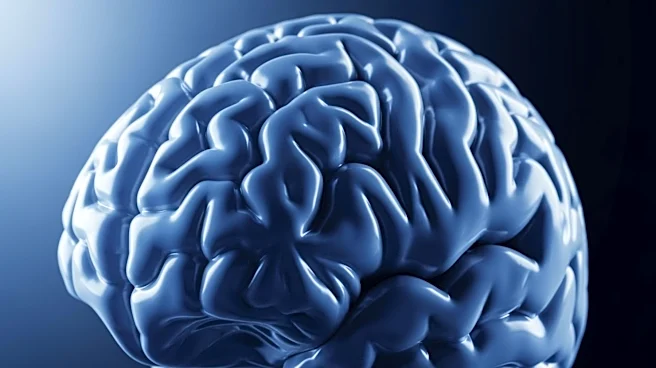
A recent study published in Biological Psychiatry: Global Open Science has found a correlation between psychopathy and specific brain structures in incarcerated men. Researchers analyzed brain scans from
over 800 men in U.S. correctional facilities, revealing that those with high psychopathy scores exhibited an expanded cortical surface area and a compressed organizational layout of brain tissue. The study, led by Marcin A. Radecki and involving researchers from institutions like the University of Cambridge and the Mind Research Network, utilized mobile MRI scanners to gather data. The research focused on the relationship between empathy, psychopathic traits, and brain anatomy, using tools like the Interpersonal Reactivity Index and the Psychopathy Checklist-Revised to assess participants.
Why It's Important?
This study provides new insights into the biological underpinnings of psychopathy, a condition characterized by a lack of empathy and antisocial behavior. By identifying specific brain structures associated with psychopathy, the research could inform future interventions aimed at reducing antisocial behavior and fostering empathy. The findings challenge previous studies that reported reduced brain volume in psychopathic individuals, suggesting that focusing on cortical surface area offers a more precise understanding. This research could have significant implications for the criminal justice system and mental health fields, potentially leading to more effective rehabilitation strategies for individuals with psychopathic traits.
What's Next?
Future research is needed to explore whether these anatomical patterns are consistent across different populations, including women and non-incarcerated individuals with psychopathic traits. Additionally, further studies could investigate the cellular mechanisms driving brain development in psychopathic individuals, which may lead to early intervention programs. Researchers also suggest using performance-based tests to assess empathy more accurately, as self-reported measures may be biased. Expanding the study to diverse populations could help determine the universality of these findings and their applicability in broader contexts.
Beyond the Headlines
The study highlights the complexity of psychopathy and its biological roots, emphasizing the need for a nuanced understanding of how brain structure influences behavior. The findings could contribute to a shift in how society perceives and addresses psychopathy, moving towards a more science-based approach in treatment and rehabilitation. This research also underscores the importance of integrating neuroscience with psychological assessments to develop comprehensive strategies for managing psychopathic behavior.