







What's Happening?
The United Nations Development Programme (UNDP), through its City Finance Advisory Function (CFAF) and the Mayors for Economic Growth (M4EG) Facility, is working to bridge the gap between secondary cities' infrastructure needs and available financing.
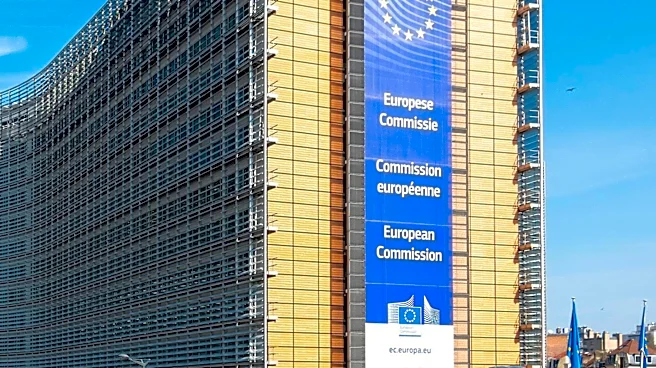
This initiative, funded by the European Union and the City Experiment Fund, focuses on municipalities in Armenia, Moldova, and Ukraine. Many secondary cities, like Tashir in Armenia, struggle to secure funding for essential projects such as water system rehabilitation, not due to a lack of need or potential funders, but because of a mismatch in how projects are developed and how financing is accessed. The CFAF helps cities strengthen their project pipelines, develop priority investments, and engage with appropriate financial institutions earlier in the process. This often involves providing technical assistance and small project-preparation grants to help cities define project scope, operational plans, and realistic funding strategies before seeking larger loans or investments.
Why It's Important?
This initiative is crucial because it addresses a fundamental barrier to sustainable development in numerous secondary cities across Europe and Central Asia. By improving municipal finance mechanisms, the UNDP is enabling critical infrastructure projects that directly impact the quality of life for residents, such as access to clean drinking water, improved transport systems, and educational facilities. The current disconnect between local needs and financing opportunities often leaves vital projects stalled, hindering economic growth and social progress. The UNDP's approach recognizes that innovative finance isn't always about new instruments but about smarter sequencing of existing funding sources and better collaboration between cities, national governments, and financial institutions. This can lead to more resilient and self-sufficient urban centers, reducing poverty and inequality in the long term.
What's Next?
The UNDP's CFAF aims for cities to develop stronger project pipelines, cultivate better relationships with financial partners, and enhance their ability to independently navigate future investments. The initiative will continue to put into practice approaches that combine various funding sources, including public, donor, and development finance, tailored to the specific needs of different project types. This involves ongoing technical assistance, project preparation support, and fostering collaboration between municipalities, national governments, and financial institutions. The long-term goal is to create a more continuous and less transactional relationship between cities and funders, ensuring that essential investments in water, transport, energy, and local infrastructure become easier to fund in the places that need them most. This will likely involve further adaptation of financing products by development banks to better suit municipal realities.
Beyond the Headlines
The challenges highlighted by the UNDP extend beyond the immediate financial aspects, touching upon issues of governance, institutional capacity, and equitable development. Many secondary cities face constraints such as limited local revenues and restricted fiscal autonomy, often requiring national approval or guarantees for borrowing. This underscores the need for policy reforms that empower local governments and streamline access to finance. Furthermore, the initiative recognizes that public-service infrastructure often yields significant economic and social value that far exceeds direct financial returns, necessitating a blend of grants and loans rather than solely commercial financing. This approach challenges traditional investment models and promotes a more holistic view of development, where social impact is valued alongside financial viability, ultimately contributing to more inclusive and sustainable urban development.