




What's Happening?
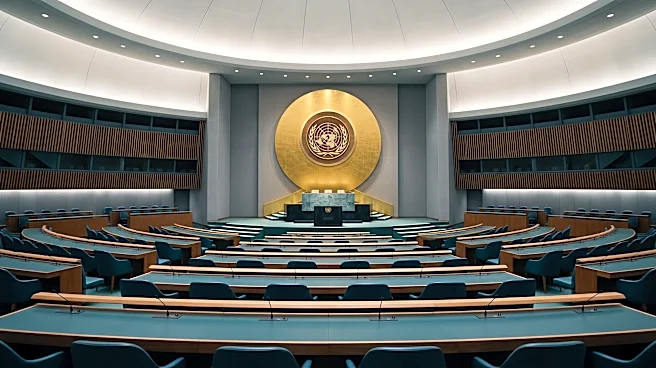
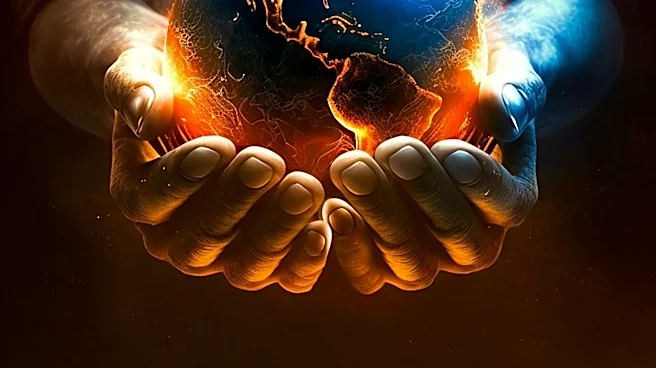
The international order is evolving into a 'world of choices,' where a growing number of countries, particularly across Asia, Africa, Latin America, and the Middle East, are refusing to align permanently with a single political camp. This shift means
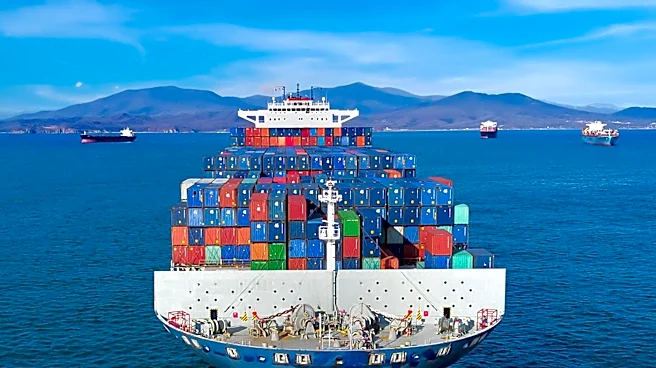
nations are developing relationships in multiple directions simultaneously, cooperating with various global powers on different issues, such as security with the U.S., trade with China, energy with Russia, and technology with Europe. This approach is seen as rational by these countries, as it allows them to maximize their strategic interests without surrendering useful relationships for political loyalty. The change is not necessarily a move from a Western to an Eastern-dominated order, but rather towards a less organized system where power is more distributed, and countries seek to maintain flexibility and room to maneuver between competing influences.
Why It's Important?
This emerging 'world of choices' profoundly impacts U.S. foreign policy and its traditional alliance structures. For decades, U.S. influence relied on a clear center of gravity, but now, countries are less willing to be led, preferring independent strategic decisions. This challenges the U.S. to adapt its diplomatic approach, moving beyond demanding loyalty to offering compelling reasons for cooperation. The U.S. must recognize that its influence, while still significant, cannot be taken for granted and must be earned through consistent application of principles and genuine listening. Economically, this shift means U.S. sanctions and trade restrictions, while powerful, could inadvertently push countries to develop alternative financial and supply chain systems, potentially diminishing long-term U.S. leverage. For U.S. businesses, understanding this multipolar environment is crucial for navigating complex international markets and diversifying risks, as traditional political alignments no longer guarantee stable economic partnerships.
What's Next?
The U.S. and other Western democracies will need to adapt their foreign policy strategies to this new reality. This will likely involve a greater emphasis on diplomacy, listening to the diverse perspectives of other nations, and demonstrating the value of democratic principles through consistent practice rather than mere proclamation. There will be a need to build relationships based on mutual interest and respect, rather than expecting unwavering political loyalty. Economically, the U.S. may see countries actively seeking to diversify their economic partners and reduce dependence on any single power, including the U.S. This could lead to the development of new trade blocs and financial systems that operate outside traditional Western dominance. The long-term trend suggests a more complex and fragmented international system, where influence is gained through persuasion and collaboration rather than through the imposition of choices.
Beyond the Headlines
This geopolitical transformation highlights a fundamental re-evaluation of power and influence in international relations. It moves beyond the simplistic 'democracies versus autocracies' narrative to acknowledge the complex, self-interested choices made by sovereign nations. The emphasis on 'listening' as a form of power suggests a more mature and nuanced approach to global engagement, recognizing the historical grievances and diverse priorities of other societies. This shift could lead to a more equitable, albeit more complicated, international system where global governance requires broader consensus and genuine multilateralism. It also challenges Western democracies to critically examine their own credibility and consistency in applying international principles. Ultimately, this 'world of choices' may foster greater global resilience by distributing economic and political power more widely, reducing the vulnerability of the international system to the actions of any single actor.