



What's Happening?
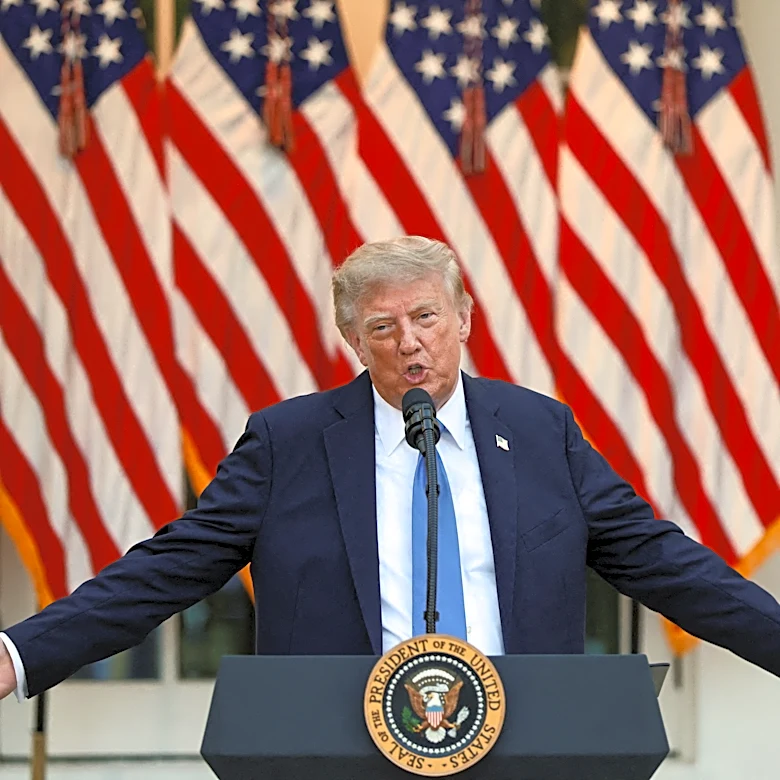
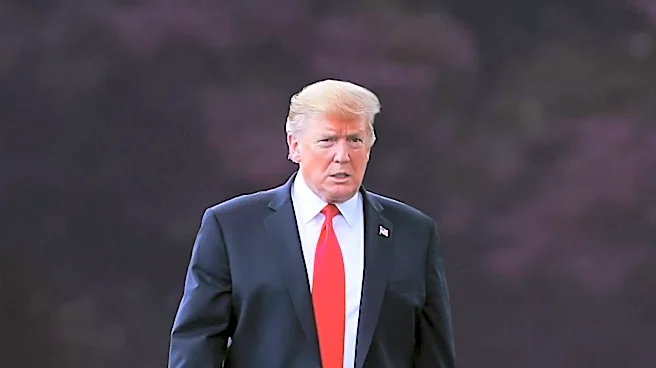
President Trump is repeatedly asserting that 'most people don't know' the word 'dumb' ends with a 'B,' using this claim to justify his preferred nickname for Democrats, 'Dumocrats.' He has stated this on multiple occasions, including to Republican lawmakers,
at the White House Correspondents' Dinner, and in interviews. President Trump explains that by replacing the 'E' in 'Democrat' with a 'U,' and acknowledging that 'most people don't know' about the silent 'B' in 'dumb,' the term 'Dumocrat' becomes a 'one-letter change.' This ongoing narrative from President Trump suggests a belief that the public is largely unaware of the correct spelling of a common four-letter word. The source highlights the implausibility of this claim, noting that 'dumb' is a word typically learned in grade school and widely known.
Why It's Important?
President Trump's persistent use and justification of the 'Dumocrat' nickname, based on a questionable premise about public literacy, is significant in the context of political discourse and public perception. This tactic can be seen as an attempt to control narratives and brand political opponents in a derogatory manner, potentially influencing voter sentiment. The emphasis on a perceived lack of public knowledge about basic spelling could also reflect a broader strategy of undermining perceived intellectual authority or creating an 'us vs. them' dynamic. For the Democratic Party, this branding effort, however seemingly trivial, contributes to the ongoing challenge of countering negative portrayals and maintaining public image. The incident also raises questions about the standards of political rhetoric and the willingness of public figures to assert claims that are easily verifiable as inaccurate, potentially eroding trust in political communication.
What's Next?
It is likely that President Trump will continue to use the 'Dumocrat' nickname and its accompanying justification in his public appearances and rallies, as it has become a recurring element of his political messaging. Opposing political figures and media outlets will probably continue to highlight the perceived absurdity of the claim, using it to critique President Trump's communication style and his approach to political debate. The ongoing repetition of this narrative could further entrench partisan divisions, with supporters potentially embracing the nickname and its rationale, while opponents use it as an example of what they view as misleading or unserious political rhetoric. The broader impact on public discourse will depend on how widely the claim is accepted or rejected, and whether it gains traction beyond President Trump's core base.
Beyond the Headlines
This episode delves into the deeper implications of political communication in an era of information saturation and partisan polarization. President Trump's insistence on a demonstrably false premise, despite its trivial nature, highlights a strategy where the perceived truthfulness of a statement can be secondary to its rhetorical impact and ability to resonate with a specific audience. It raises questions about the role of factual accuracy in political branding and the effectiveness of nicknames as tools for political mobilization or denigration. The incident also touches upon the broader cultural implications of literacy and education, as President Trump's claim implicitly suggests a widespread deficiency in basic knowledge. This could contribute to a climate where verifiable facts are increasingly contested, and where political narratives are constructed on foundations that prioritize emotional appeal or partisan loyalty over objective reality.