






What's Happening?
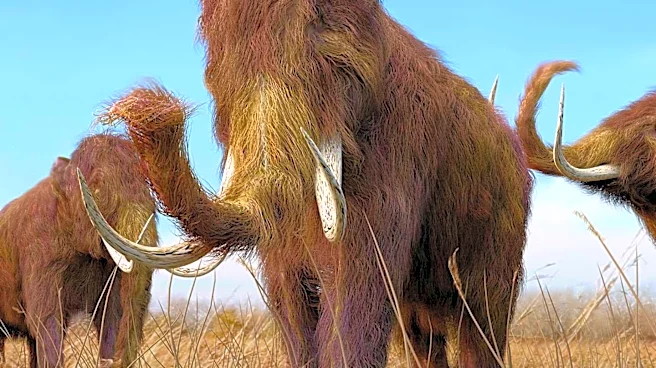
A recent study published in Current Biology suggests that Ice Age humans preferred hunting female woolly mammoths. DNA analysis of over 500 mammoth bones indicates that sites with human activity predominantly contain female remains. This finding challenges
previous assumptions about hunting practices, suggesting that humans may have targeted female mammoths due to their predictable movement patterns or because they lived in herds. The study also discovered a mammoth with a rare genetic condition, X0/XX mosaicism, marking the first documentation of such a condition in an extinct species.
Why It's Important?
The study provides new insights into the behavior and social structures of woolly mammoths, as well as the hunting strategies of Ice Age humans. Understanding these dynamics can enhance knowledge of human evolution and adaptation strategies. The discovery of genetic conditions in extinct species also opens new avenues for research in paleogenetics, potentially offering clues about the evolution of genetic diversity and adaptation. These findings contribute to the broader understanding of prehistoric ecosystems and the interactions between humans and megafauna.