






What's Happening?
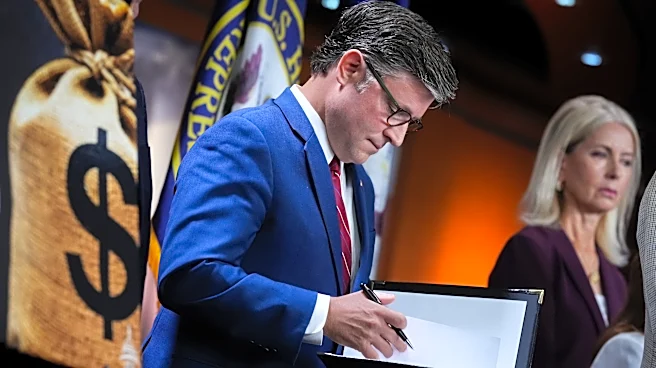
Congress is currently negotiating the federal budget for the 2027-28 school year, focusing on significant cuts to education funding. The House appropriations subcommittee on education and labor issues has advanced a fiscal 2027 budget bill, which proposes
a $1.6 billion reduction in annual Title I grants for low-income students. Additionally, the bill eliminates billions in formula and competitive grants for schools and colleges and reduces investment in education research. The bill passed on a party-line vote of 11-7, with Republican lawmakers supporting it as a necessary measure for fiscal prudence. However, Democratic representatives, such as Rep. Rosa DeLauro, have criticized the cuts, suggesting they could undermine public education. Amendments proposed by Rep. Steny Hoyer to restore funding for certain grant programs were not voted on, highlighting the partisan nature of the budget discussions.
Why It's Important?
The proposed budget cuts have significant implications for the U.S. education system, particularly for low-income students who rely on Title I grants. The reduction in funding could lead to decreased resources and support for schools serving disadvantaged communities, potentially widening the educational gap. The elimination of competitive grants may also stifle innovation and development in educational programs. These budgetary decisions reflect broader political debates over the role of federal funding in education and the prioritization of fiscal austerity over educational investment. The outcome of these negotiations will impact students, educators, and educational institutions across the country, influencing the quality and accessibility of education.
What's Next?
The budget bill will proceed to the full House appropriations committee for further markup on June 9. This next step will involve more detailed discussions and potential revisions to the proposed budget. Stakeholders, including educators, advocacy groups, and policymakers, are likely to continue lobbying for or against the proposed cuts. The final decision will shape the funding landscape for the upcoming school year, affecting planning and operations for educational institutions nationwide.