
What's Happening?
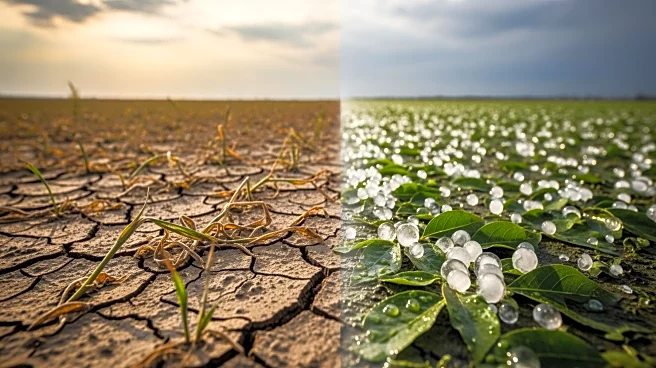
In 2025, Brazilian agriculture has been significantly affected by erratic weather conditions, including hailstorms and droughts. A hailstorm in Goiás destroyed 230 hectares of soybeans, forcing replanting
and delaying the harvest. Meanwhile, drought in Iporá led to a state of public calamity, disrupting planting schedules. Despite these challenges, the National Supply Company (Conab) projects a grain production of 354 million tons for the 2025/26 harvest. However, corn production is expected to fall short of the record set in 2025 due to adverse weather conditions. The situation highlights the vulnerability of agriculture to climate variability.
Why It's Important?
The impact of climate change on agriculture is a critical issue, as it affects food security and economic stability. Brazil is a major global supplier of agricultural products, and disruptions in its production can have far-reaching effects on international markets. The challenges faced by Brazilian farmers underscore the need for adaptive strategies to mitigate climate risks. The projected decrease in corn production could lead to supply shortages and increased prices, affecting both domestic and international markets. This situation also emphasizes the importance of sustainable agricultural practices and investment in climate-resilient infrastructure.
What's Next?
Brazilian farmers and policymakers will need to focus on strategies to adapt to changing climate conditions. This may include investing in drought-resistant crop varieties, improving water management practices, and enhancing infrastructure to withstand extreme weather events. The government and agricultural organizations may also need to provide support to affected farmers to help them recover from losses and ensure food security. As the global demand for agricultural products continues to grow, Brazil's ability to adapt to climate challenges will be crucial in maintaining its position as a leading agricultural exporter.