







What's Happening?
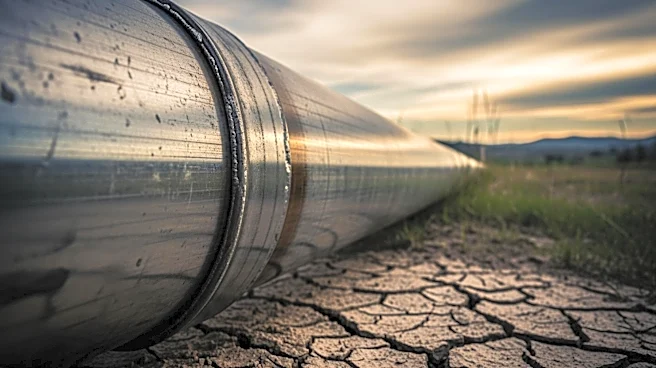
The U.S. Army Corps of Engineers has granted final approval for the Dakota Access oil pipeline to continue operating its Missouri River crossing. This decision comes nearly a decade after significant protests by the Standing Rock Sioux Tribe and other
groups. The pipeline, which has been operational since June 2017, transports oil from North Dakota to Illinois, accounting for about 4% of U.S. daily oil production. The Corps' approval includes conditions for enhanced leak detection and groundwater monitoring. Despite this, the Standing Rock Sioux Tribe remains opposed, citing concerns over potential water contamination and treaty rights. The tribe plans to continue legal challenges to protect their water and sacred sites.
Why It's Important?
The approval of the Dakota Access pipeline segment is significant for the U.S. energy infrastructure, as it ensures the continued flow of oil from North Dakota's Bakken oil field. This decision supports the energy sector by maintaining a critical supply line, which is vital for meeting national energy demands. However, it also highlights ongoing tensions between federal authorities and Indigenous groups over environmental and treaty rights. The Standing Rock Sioux Tribe's opposition underscores broader issues of environmental justice and the need for meaningful tribal consultation in infrastructure projects. The decision may set a precedent for how similar disputes are handled in the future.
What's Next?
The Standing Rock Sioux Tribe intends to pursue further legal action to challenge the pipeline's operation, focusing on treaty rights and environmental concerns. The U.S. Army Corps of Engineers' decision may face additional scrutiny and potential litigation, which could impact future infrastructure projects involving tribal lands. Energy Transfer, the pipeline's developer, plans to expand its operations by integrating Canadian crude oil into the pipeline, pending further approvals. This expansion could lead to increased production and economic benefits, but also heightened environmental and legal challenges.