




What's Happening?
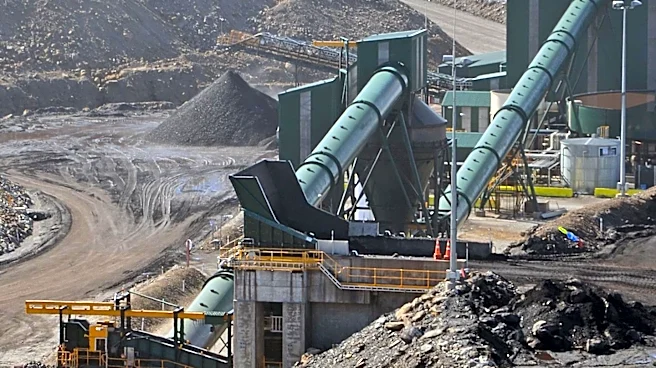
North Carolina is the only U.S. state with commercial mining operations explicitly for pyrophyllite, a hydrous aluminum silicate mineral. These deposits are located within the extensive Carolina Slate Belt, which consists of metamorphosed volcanic and
sedimentary rocks with a Cambrian or late Precambrian heritage. The Carolina Terrane, where these deposits are found, is believed to have accreted to Laurentia (North America) approximately 450 million years ago during the mid- to late Ordovician period. Pyrophyllite is a phyllosilicate, similar to talc, and is characterized by its sheet-like structure. It is soft, has a greasy feel, and exfoliates when heated. Globally, South Korea and Japan are leading producers of pyrophyllite, while China accounts for about a quarter of the world's talc and related materials, including pyrophyllite.
Why It's Important?
The unique concentration of commercial pyrophyllite mining in North Carolina highlights the geological distinctiveness of the region and its contribution to specific industrial sectors. Pyrophyllite is a versatile mineral used in various applications, including refractories in the steel industry, paints, ceramics (such as tiles, sinks, and toilets), and as a carrier in insecticides. It also serves as a filler in plastics, rubber, and bricks, sometimes replacing talc. The domestic availability of pyrophyllite from North Carolina reduces reliance on international imports for these critical industrial materials, contributing to U.S. economic stability and supply chain resilience in relevant manufacturing sectors. Understanding the geological origins and properties of such minerals is crucial for resource management and industrial planning.
What's Next?
The future of pyrophyllite mining in North Carolina will likely depend on continued industrial demand and advancements in extraction and processing technologies. Research into new applications for pyrophyllite could further enhance its economic importance. Geological surveys and studies will continue to refine our understanding of the Carolina Slate Belt's formation and mineral distribution, potentially identifying new deposits or optimizing existing operations. Environmental regulations and sustainable mining practices will also play a significant role in shaping the industry's trajectory, ensuring that resource extraction is balanced with ecological preservation. The global market for pyrophyllite and similar minerals will also influence the scale and profitability of U.S. operations.
Beyond the Headlines
The story of pyrophyllite in North Carolina offers a glimpse into the deeper geological history of the North American continent. The Carolina Slate Belt's ancient origins and its accretion to Laurentia illustrate the dynamic processes of plate tectonics that have shaped continents over hundreds of millions of years. The formation of pyrophyllite through low-temperature retrograde metamorphism or hydrothermal alteration connects the mineral's presence to complex geological events, including those associated with gold deposits. This connection underscores how seemingly disparate geological phenomena are often intertwined. Furthermore, the mineral's properties, such as its ability to swell and exfoliate when heated, reveal fascinating aspects of material science rooted in natural processes, demonstrating the intricate relationship between geological composition and industrial utility.