
What's Happening?
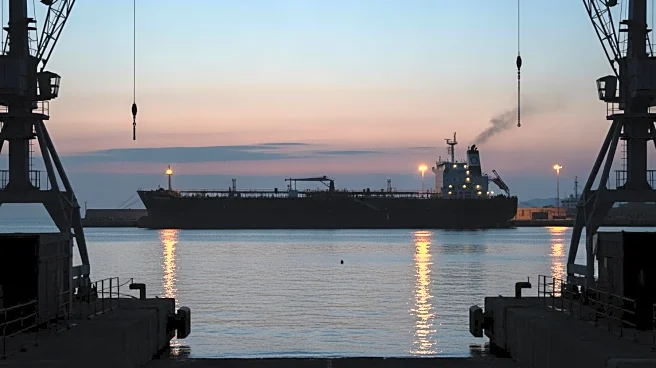
The French navy has intercepted a tanker in the Mediterranean Sea, suspected of violating sanctions against Russia by shipping oil. The vessel, named Grinch, was diverted to the Gulf of Fos-sur-Mer, where
its Indian captain, aged 58, was taken into custody for questioning. The investigation, led by the Maritime Gendarmerie’s Investigation Unit in Toulon and the Marseille Ship Safety Centre, focuses on the validity of the flag flown by the tanker and its navigation documents. The Grinch, originating from Murmansk, Russia, is believed to be part of a 'shadow fleet' used by Russia to evade sanctions related to its war on Ukraine. This fleet reportedly consists of over 400 ships, often older vessels owned by non-transparent entities, and sailing under flags of non-sanctioning countries.
Why It's Important?
This incident highlights ongoing international efforts to enforce sanctions against Russia, particularly in response to its actions in Ukraine. The interception of the Grinch underscores the challenges faced by countries like France in monitoring and controlling maritime activities that may violate international sanctions. The use of a 'shadow fleet' by Russia to circumvent these sanctions poses significant geopolitical and economic challenges, as it involves complex networks of ownership and flag registration. The situation also reflects broader tensions between Russia and Western nations, with potential implications for global oil markets and international maritime law enforcement.
What's Next?
The investigation into the Grinch's activities will continue, with French authorities likely to scrutinize the vessel's documentation and flag status. This case may prompt further international cooperation to address the use of 'shadow fleets' and enhance maritime surveillance. Additionally, the outcome of this investigation could influence future policy decisions regarding sanctions enforcement and maritime security. Other countries may also increase their efforts to monitor and intercept vessels suspected of similar activities, potentially leading to heightened tensions in international waters.