





What's Happening?
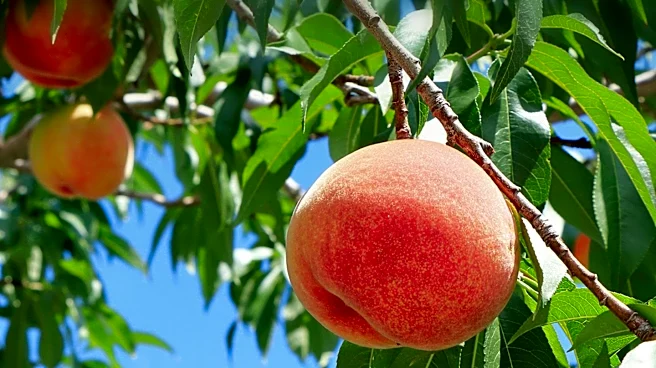
Farmers in Western Colorado, particularly in Palisade, are facing significant challenges due to prolonged drought conditions. Bruce Talbott, a major peach grower, is experiencing difficulties as the lack of snowpack in the Colorado River's headwaters
has led to reduced irrigation water supplies. This situation has forced Talbott to begin harvesting peaches a month earlier than usual, with concerns about having enough water to complete the harvest. The drought has intensified worries about the long-term viability of peach farming in the region, as water scarcity becomes a more pressing issue.
Why It's Important?
The drought in Western Colorado is a stark reminder of the broader impacts of climate change on agriculture. As water resources become increasingly scarce, farmers like Talbott must adapt to changing conditions, which could involve significant financial investments and shifts in farming practices. The economic implications are substantial, as peaches are a high-value crop that supports local economies. The situation also highlights the need for sustainable water management practices and potential policy interventions to support farmers in adapting to climate change.
What's Next?
Farmers in the region are hoping for monsoon rains to alleviate some of the water shortages, but contingency plans are being developed to sustain orchards if water supplies run out. This includes using municipal water to keep trees alive. In the long term, farmers may need to explore alternative crops or more efficient irrigation methods to cope with the changing climate. The situation may also prompt discussions among policymakers and stakeholders about water rights and resource allocation in the Colorado River Basin.