







What's Happening?
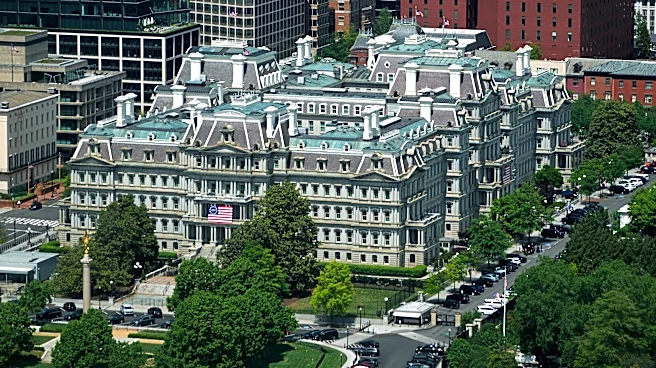
President Trump has proposed a plan to repaint the Eisenhower Executive Office Building (EEOB) in Washington, D.C., which is estimated to cost $7.5 million. The proposal involves painting the granite exterior of the historic building white, a move that
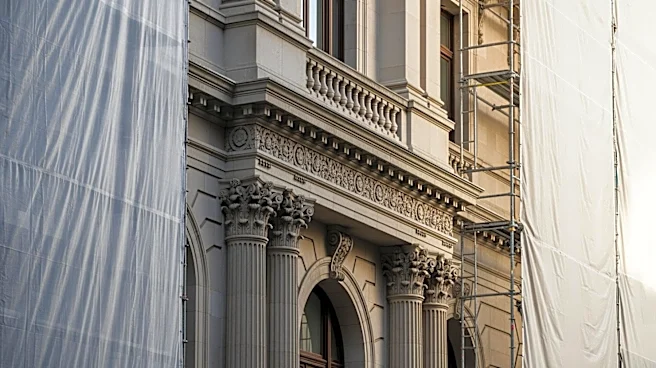
has sparked significant public and preservationist opposition. During a session with the National Capital Planning Commission (NCPC), concerns were raised about the visual and physical impacts of the project on the building and the surrounding historic district. The NCPC has requested further details on the project's impact, maintenance costs, and potential alternatives such as exterior lighting. The White House Office of Administration is still gathering information, with preliminary estimates suggesting the paint job could last 25 years, though this does not include initial cleaning or future repainting costs. Public comments have been overwhelmingly negative, with over 2,000 submissions opposing the project.
Why It's Important?
The proposal to repaint the EEOB is significant as it highlights ongoing tensions between federal aesthetic projects and historic preservation efforts. The building, part of the Lafayette Square National Historic Landmark District, holds historical value, and changes to its appearance could set a precedent for future alterations to historic sites. The financial implications are also notable, with the $7.5 million cost raising questions about federal spending priorities, especially given the potential for ongoing maintenance expenses. The project has drawn public scrutiny, reflecting broader concerns about the administration's approach to federal architecture and heritage conservation. The outcome of this proposal could influence future federal projects and the balance between modernization and preservation.
What's Next?
The NCPC has approved a motion requesting more information, indicating that the proposal will undergo further review. The White House Office of Administration will need to provide additional details on the project's feasibility and impact. Public opposition, including a lawsuit from Cultural Heritage Partners, suggests that legal challenges may continue to play a role in the project's future. The administration will likely face continued scrutiny from preservationists and the public as it seeks to move forward with the plan. The project's progress will depend on the administration's ability to address concerns and provide a compelling case for the repainting.