

What's Happening?
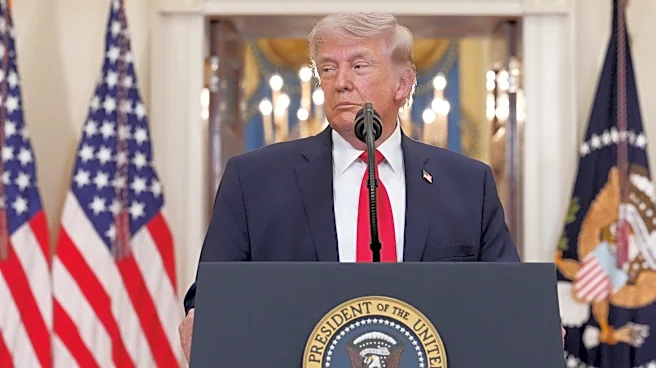
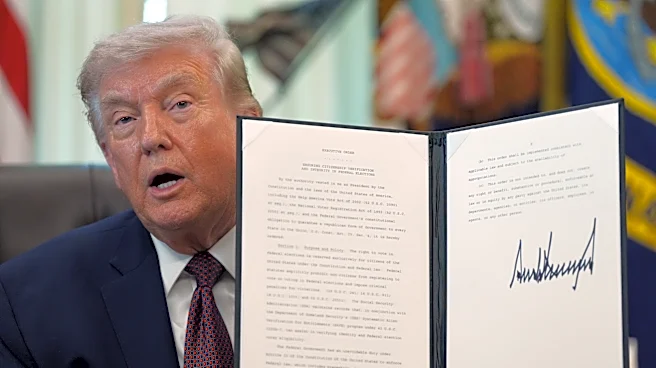
President Trump is preparing to sign an executive order aimed at regulating various aspects of college sports. This order is expected to address issues such as NIL (Name, Image, Likeness) collectives, transfer limits, player eligibility, and funding for
Olympic and women's sports. The executive order proposes allowing one transfer per player and granting players five years to complete five seasons. This move comes as a response to longstanding antitrust violations by the NCAA, which have been exposed in court. The NCAA and universities have historically created rules that controlled labor costs, leading to a lack of player representation. The enforceability of this executive order is in question, as Congress is traditionally responsible for making laws. However, due to congressional inaction, President Trump is taking steps to address the situation, influenced by lobbying from various stakeholders.
Why It's Important?
The executive order represents a significant intervention in college sports, potentially reshaping the landscape by addressing issues of player rights and institutional control. If implemented, it could lead to increased fairness and opportunities for college athletes, particularly in terms of financial compensation and career mobility. The order also highlights the ongoing struggle between legislative and executive powers in the U.S., as the President steps in where Congress has stalled. This could set a precedent for future executive actions in areas traditionally governed by legislative processes. The outcome of this order could impact universities financially and operationally, as they may need to adjust to new regulations and funding requirements.
What's Next?
The signing of the executive order is likely to prompt reactions from various stakeholders, including universities, athletic associations, and player advocacy groups. Legal challenges may arise, questioning the President's authority to enforce such regulations without congressional approval. Universities may need to prepare for potential changes in compliance and funding structures. Additionally, players and their representatives might use this opportunity to push for further reforms and representation. The broader implications for college sports governance and the balance of power between the executive branch and Congress will be closely watched.