





What's Happening?
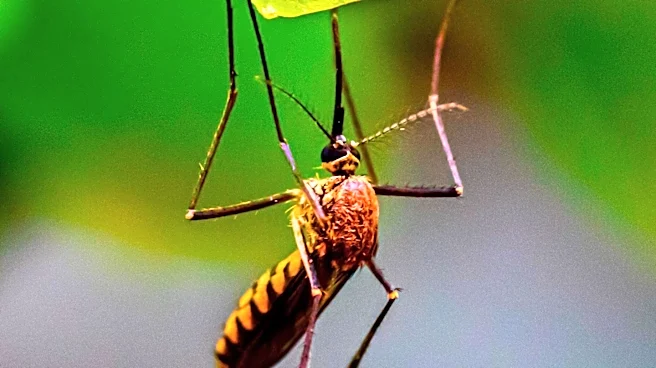
Maryland has reported its first human case of West Nile virus for 2026, with the patient located in the Capital Region. The Maryland Department of Health has not disclosed the specific county, citing privacy concerns. This leaves residents in Prince George's,
Montgomery, Charles, Calvert, and St. Mary's counties uncertain about the exact location of the case. The state emphasizes that the presence of a single case indicates ongoing transmission, not the extent of it. The Maryland Department of Agriculture provides mosquito surveillance data through public notices for unscheduled mosquito spraying, which are based on positive surveillance findings. These notices offer more precise information than county-level case reports, as they indicate areas where mosquitoes have tested positive for the virus.
Why It's Important?
The confirmation of a West Nile virus case is significant as it signals active transmission of the virus, which poses a health risk, particularly to adults over 50 and those with weakened immune systems. The lack of a human vaccine or specific antiviral treatment for West Nile virus underscores the importance of preventive measures, such as avoiding mosquito bites. The state's approach to withholding specific location details is standard practice to protect patient privacy, but it highlights the need for public awareness of mosquito control efforts. The Maryland Department of Agriculture's mosquito control program, which includes surveillance and spraying, plays a crucial role in managing the spread of the virus.
What's Next?
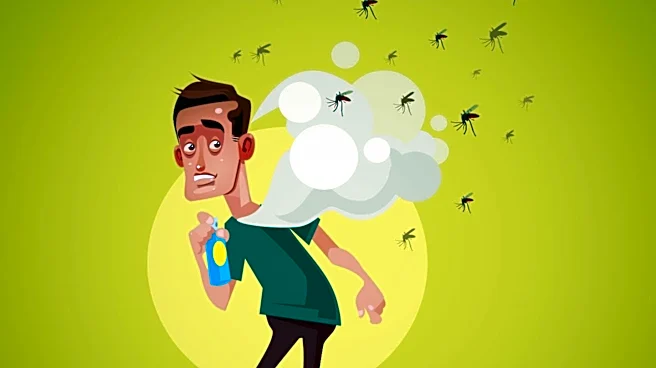
As the peak season for West Nile virus transmission approaches in August and September, Maryland residents are advised to take preventive measures against mosquito bites. This includes using insect repellent, wearing protective clothing, and eliminating standing water where mosquitoes breed. The state will continue to monitor and report additional cases and expand mosquito control efforts as needed. Residents can stay informed by checking the Maryland Department of Agriculture's spray notices and contacting the Mosquito Control Program for more information.