






What's Happening?
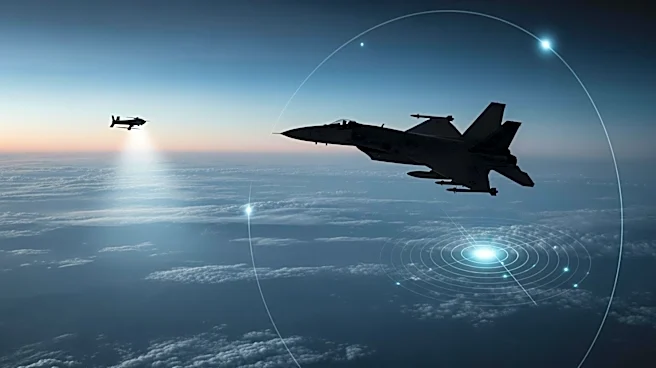
A French military Rafale fighter jet intercepted and shot down a drone that entered Latvian airspace from Russia. This incident is part of a series of security breaches along Europe's eastern borders, raising concerns about the potential spillover of the Ukraine
conflict into NATO territories. The Latvian army attributed the drone's entry to Russian electromagnetic warfare, although it did not specify who launched the drone. The event prompted authorities to issue warnings to residents in eastern Latvia to seek shelter. The French jet involved in the interception is part of the NATO Baltic Air Policing mission, which has been active since Latvia, Lithuania, and Estonia joined NATO in 2004. This mission also includes Romanian and Portuguese fighter jets stationed in the region.
Why It's Important?
The interception of the drone highlights the escalating tensions between NATO countries and Russia, particularly in the context of the ongoing conflict in Ukraine. The use of electromagnetic warfare by Russia to disrupt drone paths poses a significant threat to the security of NATO member states. This incident underscores the need for enhanced vigilance and coordination among NATO allies to protect their airspace and maintain regional stability. The situation also reflects the broader geopolitical challenges faced by NATO as it seeks to deter Russian aggression and support Ukraine amidst the conflict.
What's Next?
NATO is likely to increase its air policing efforts and enhance its defensive measures in response to these security incidents. Member states may engage in further diplomatic discussions to address the threat posed by Russian electromagnetic warfare and explore additional strategies to safeguard their airspace. The situation may also prompt NATO to consider strengthening its cyber defense capabilities to counteract potential electronic warfare tactics employed by Russia. Continued monitoring and intelligence sharing among NATO allies will be crucial in preventing future incursions and maintaining regional security.