





What's Happening?
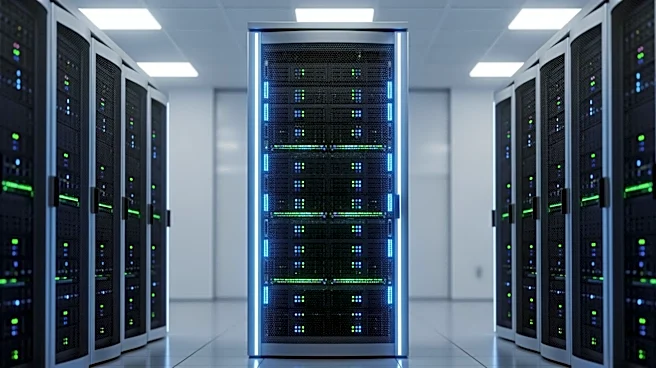
The House Homeland Security Subcommittee on Cybersecurity and Infrastructure Protection is evaluating whether data centers should be designated as a standalone critical infrastructure sector. This discussion arises as data centers face increasing threats,
including recent drone attacks on Amazon facilities by Iranian forces. The rapid growth of data centers, driven by advancements in artificial intelligence, has prompted concerns about their security. Currently, three major providers—Amazon Web Services, Microsoft Azure, and Google Cloud Platform—dominate the market. Lawmakers and industry experts are debating the federal government's role in securing these facilities, with some suggesting a unique coordinating council for data centers. The United Kingdom has already recognized data centers as critical infrastructure, and similar measures are being considered in the U.S.
Why It's Important?
Data centers are integral to the functioning of various sectors, including the economy, military, and public services. A successful attack on these facilities could have widespread consequences, affecting not just individual companies but entire industries. The current lack of a unified federal approach to data center security leaves these critical assets vulnerable. By designating data centers as critical infrastructure, the government could enhance coordination and response efforts, potentially preventing significant disruptions. This move could also align the U.S. with international standards, as seen in the U.K., and ensure that data centers receive the necessary protection against evolving cyber threats.
What's Next?
The subcommittee's deliberations may lead to legislative proposals aimed at enhancing data center security. If data centers are designated as critical infrastructure, it could result in increased federal oversight and funding for security measures. Industry stakeholders, including major tech companies, are likely to play a significant role in shaping these policies. The outcome of these discussions could set a precedent for how other emerging technologies and infrastructures are protected in the future.