



What's Happening?
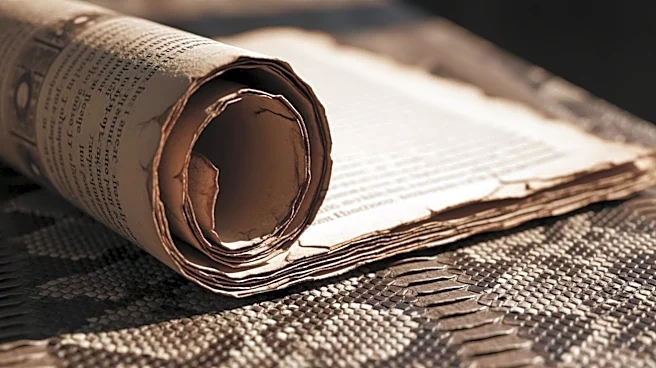
In Gaziantep, Turkey, authorities have seized a rare manuscript inscribed with Hebrew letters in gold on python skin, believed to be part of illegal antiquities trafficking. The manuscript, approximately two meters long, was discovered rolled into a scroll
and stored in a copper case with a decorated lid. The suspect, a foreign national, was detained by Turkey's Gendarmerie, a military-style law enforcement agency, during an operation aimed at curbing the illegal trade of historical artifacts. This operation is part of ongoing efforts by Turkish authorities to combat illegal excavations and the trafficking of antiquities, which remain significant issues in the region. The investigation is still underway, with the suspect in custody and no additional suspects named at this time.
Why It's Important?
The seizure of the manuscript highlights the persistent issue of illegal antiquities trafficking, which threatens cultural heritage and historical preservation. Turkey, with its rich archaeological history, is particularly vulnerable to such illegal activities. The operation underscores the importance of international cooperation in protecting cultural artifacts and preventing their sale on the black market. The incident also raises awareness about the need for stricter enforcement of laws against illegal excavations and the trade of historical items. The successful interception of this artifact by Turkish authorities may deter future attempts and encourage other nations to bolster their efforts in safeguarding cultural heritage.
What's Next?
As the investigation continues, Turkish authorities are likely to intensify their efforts to track and dismantle networks involved in the illegal trade of antiquities. This may involve increased surveillance and collaboration with international law enforcement agencies to identify and prosecute those responsible for such crimes. The case could also prompt discussions on enhancing legal frameworks and penalties related to antiquities trafficking. Additionally, there may be efforts to repatriate the seized artifact to its rightful cultural context, ensuring its preservation and study by scholars and historians.