
What's Happening?
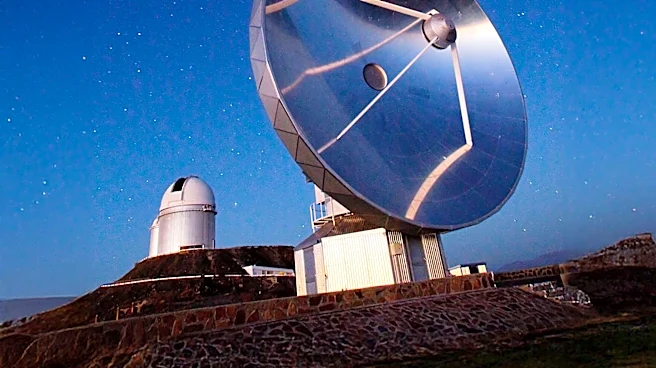
Mauna Kea in Hawaii hosts one of the world's largest concentrations of telescopes, attracting astronomers from 11 countries. The summit's unique atmospheric conditions, with thin and dry air, provide exceptional
clarity for observing distant galaxies and other celestial phenomena. Thirteen major telescopes, including the Keck and Subaru, have been built on the dormant volcano since the 1960s. However, the future of these observatories is uncertain due to administrative and cultural challenges, including the need for new leases and the impact of the Thirty Meter Telescope project.
Why It's Important?
Mauna Kea is a critical site for astronomical research, contributing to significant discoveries in cosmology, exoplanet studies, and the early universe's structure. The telescopes' presence underscores the importance of international collaboration in advancing scientific knowledge. However, the site's future is complicated by cultural and environmental considerations, as Mauna Kea is sacred to Native Hawaiians. Balancing scientific research with cultural stewardship presents a complex challenge that could influence the governance of similar sites worldwide.
What's Next?
The Mauna Kea Stewardship and Oversight Authority, established in 2022, will take full responsibility for the summit in 2028. Decisions regarding the renewal of leases for existing telescopes and the construction of new facilities, such as the Thirty Meter Telescope, will shape the site's future. The outcome will depend on negotiations between scientific institutions, cultural groups, and government bodies. The situation highlights the need for policies that respect cultural heritage while supporting scientific advancement.