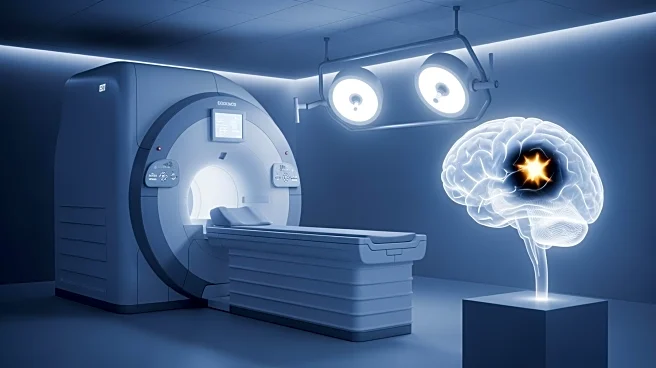




What's Happening?
Sean Clifford, a 35-year-old man from New York City, is suing Prenuvo, a company that offers whole-body MRI scans, after suffering a stroke that was not detected by the scan he underwent. Clifford paid approximately $2,500 for the scan, which failed to
identify a narrowing and irregularity in his proximal right middle cerebral artery, a common site for strokes. As a result, Clifford is now paralyzed on his left side and permanently disabled. The lawsuit, filed in September 2024, was approved to proceed last month. Prenuvo, endorsed by celebrities like Paris Hilton and Cindy Crawford, claims to offer scans that can detect various health issues, but the incident highlights concerns about the reliability of such scans. Critics argue that these scans can provide false reassurance and may miss critical health warnings.
Why It's Important?
The lawsuit against Prenuvo underscores the potential risks associated with relying on whole-body MRI scans for comprehensive health assessments. While these scans are marketed as capable of detecting a wide range of health issues, the case of Sean Clifford reveals that they may not be foolproof. This raises questions about the efficacy and reliability of such expensive procedures, which are often sought by individuals looking for peace of mind regarding their health. The incident may prompt further scrutiny of the medical imaging industry and lead to calls for more stringent regulations and standards to ensure patient safety. Additionally, it highlights the need for patients to critically evaluate the claims made by companies offering advanced medical technologies.
What's Next?
As the lawsuit progresses, it may lead to increased regulatory oversight of companies offering whole-body MRI scans. The medical community might push for clearer guidelines on the use and interpretation of these scans to prevent similar incidents. Prenuvo's response to the lawsuit and its commitment to addressing the allegations through legal processes will be closely watched. The case could also influence public perception of celebrity-endorsed medical services, prompting consumers to be more cautious about the health claims made by such companies.