



What's Happening?
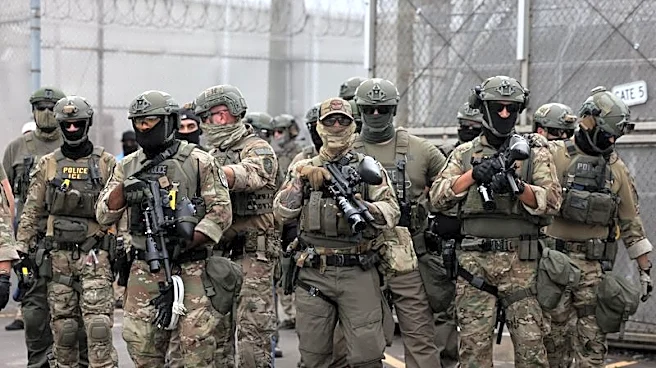
The U.S. Immigration and Customs Enforcement (ICE) has denied maintaining a database of protesters, despite a letter to Congress revealing that the agency collects information on individuals involved in protests. This development follows an incident in Portland,
Maine, where federal agents were observed taking photos of license plates during an immigration crackdown. A letter from former acting ICE director Todd Lyons to Congress acknowledged that ICE collects data on individuals suspected of interfering with ICE operations, although it denies maintaining a specific database for protesters. The letter was in response to inquiries from Rep. Maxwell Frost and other Democratic members of Congress regarding data collection practices on protesters.
Why It's Important?
The revelation of ICE's data collection practices raises significant concerns about civil liberties and the potential for government overreach. Critics argue that the collection of information on individuals exercising their First Amendment rights could lead to intimidation and a chilling effect on lawful protests. The acknowledgment of data collection, even without a formal database, suggests that federal agencies may be monitoring citizens more closely than previously disclosed. This has implications for privacy rights and the balance between national security and individual freedoms, particularly in the context of immigration enforcement.
What's Next?
The issue is likely to prompt further scrutiny from lawmakers and civil rights organizations. Rep. Maxwell Frost has indicated plans to continue pressing the Department of Homeland Security for more transparency regarding data collection practices. Legal challenges may also arise, as civil liberties groups seek to protect the rights of individuals to protest without fear of surveillance. The ongoing debate will likely focus on the need for clear guidelines and oversight to ensure that data collection practices do not infringe on constitutional rights.
Beyond the Headlines
The situation highlights broader concerns about the use of surveillance technology by federal agencies. The potential use of facial recognition and other advanced tools to monitor protests raises ethical questions about privacy and the potential for misuse. As technology continues to evolve, the legal and ethical frameworks governing its use will need to be re-evaluated to protect individual rights while addressing security concerns.