

What's Happening?
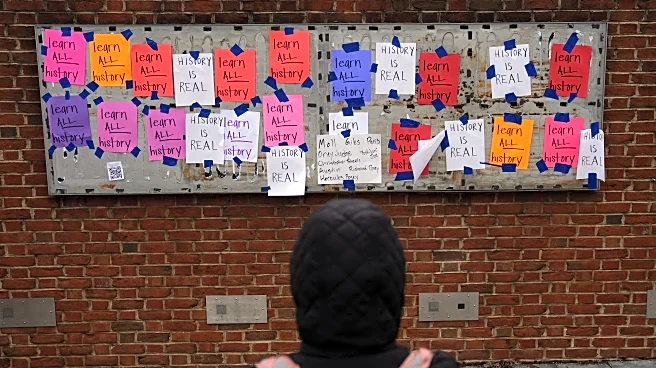
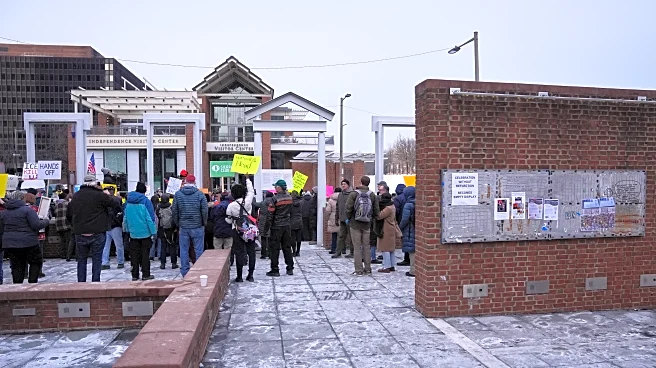
The Trump administration is appealing a federal judge's order to restore an exhibit on slavery at the President's House in Philadelphia. The exhibit, which focused on the nine people enslaved by George Washington, was removed by the National Park Service,
prompting a lawsuit from the city and other supporters. U.S. District Judge Cynthia Rufe granted an injunction to restore the exhibit, comparing the administration's actions to the totalitarian regime depicted in George Orwell's '1984.' The administration argues that it has the authority to decide the narratives presented at National Park Service sites.
Why It's Important?
This legal battle highlights the ongoing debate over how historical narratives are presented in public spaces. The removal of the slavery exhibit raises concerns about historical erasure and the importance of acknowledging all aspects of American history, including its darker chapters. The outcome of this case could set a precedent for how historical sites are managed and the extent to which federal agencies can alter or remove historical content. It also underscores the tension between federal authority and local interests in preserving historical accuracy and inclusivity.
What's Next?
The appeal will be heard by the 3rd U.S. Circuit Court of Appeals. The decision could have broader implications for how historical narratives are curated at national sites across the country. Stakeholders, including historians, civil rights groups, and local governments, will likely continue to advocate for the preservation of comprehensive historical narratives. The case may also prompt discussions about the role of federal agencies in shaping public history and the importance of collaboration with local entities.