








What's Happening?
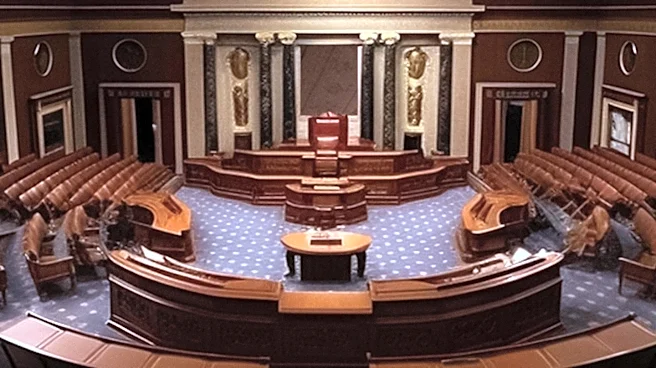
The U.S. House of Representatives has passed the Combating Organized Retail Crime Act of 2025, which aims to address the growing issue of organized retail crime involving illegally obtained goods. This legislation seeks to create a coordinated federal
response to such crimes and expand federal money-laundering laws to include offenses involving prepaid cards and gift certificates. The act comes in response to a rise in sophisticated retail crime schemes, including the use of stolen card data loaded into phone wallets for fraudulent purchases. Law enforcement officials estimate that these organized crime groups may be generating up to $1 billion annually through such activities.
Why It's Important?
Organized retail crime poses a significant threat to the retail industry, with financial losses impacting businesses and consumers alike. The use of digital wallets and prepaid cards in these schemes makes it difficult for retailers to detect fraud, leading to increased costs and potential security vulnerabilities. By expanding money-laundering laws and enhancing federal coordination, the legislation aims to curb these activities and protect the retail sector. This could lead to improved security measures and reduced financial losses for businesses, ultimately benefiting consumers through more stable pricing and enhanced trust in digital payment systems.
What's Next?
As the Combating Organized Retail Crime Act of 2025 moves forward, its implementation will require collaboration between federal agencies, law enforcement, and the retail industry. Retailers may need to adopt new security measures and technologies to detect and prevent fraud. Additionally, public awareness campaigns could be launched to educate consumers about the risks of digital payment fraud and the importance of safeguarding personal information. The effectiveness of the legislation will depend on its enforcement and the ability to adapt to evolving criminal tactics.