







What's Happening?
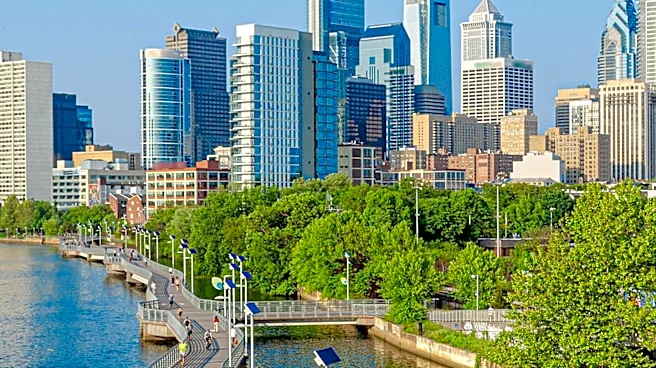
The Philadelphia Streets Department is set to reopen the Schuylkill River Trail pedestrian swing bridge on Friday, November 13th, a project that cost $28 million. This bridge aims to safely and accessibly connect Southwest Philadelphia and Center City,
addressing a long-standing need for dedicated pedestrian and cyclist pathways across the Schuylkill River. The initiative, which began in 2018, will be celebrated with a ribbon-cutting ceremony on Friday, followed by a community walk and bike trail tours on Saturday, November 14th. This new infrastructure is expected to close a significant gap in the regional trail network, creating over nine miles of continuous trail between Bartram’s Garden and the Wissahickon Transportation Center. The project is part of a broader vision to enhance connectivity and provide safer alternatives for non-vehicular travel in the city.
Why It's Important?
The opening of the Schuylkill River Trail pedestrian swing bridge holds significant importance for urban planning, public health, and economic development in Philadelphia. Historically, the Schuylkill River has acted as a barrier, with limited safe crossings for pedestrians and cyclists, often forcing them onto busy roadways. This new bridge provides a dedicated, safe passage, which is crucial for encouraging active transportation and reducing reliance on cars. For residents of Southwest Philadelphia, an area with a high poverty rate, the bridge offers improved access to job opportunities in Center City and the new Bellwether District, potentially fostering economic mobility. Additionally, it enhances access to nature trails like the Schuylkill River Trail and Bartram’s Mile, promoting recreational activities and improving the quality of life for city residents. The project also contributes to the larger goal of creating an 800-mile connected trail network across Pennsylvania and New Jersey, demonstrating a commitment to sustainable urban infrastructure.
What's Next?
Following the official reopening on November 13th, the bridge will immediately become operational, providing a new route for pedestrians and cyclists. The celebratory events, including the ribbon-cutting and community tours, are designed to raise awareness and encourage public use of the new infrastructure. The success of this bridge is expected to further galvanize efforts by organizations like the Circuit Trails Coalition, which advocates for more bike and walking trails. This could lead to increased funding and support for similar projects, expanding the network of safe and accessible trails throughout the region. City and state officials have also committed to improving safety features on existing trails, such as repairing damaged lighting, to ensure a secure environment for users. The long-term impact will be monitored, particularly regarding its effect on community connectivity, economic access, and public health outcomes in the areas it serves.
Beyond the Headlines
The Schuylkill River Trail pedestrian swing bridge represents more than just a physical connection; it symbolizes a shift in urban development priorities towards human-centric infrastructure. For decades, urban planning often prioritized vehicular traffic, leading to fragmented communities and unsafe conditions for pedestrians and cyclists. This project, however, underscores a growing recognition of the value that trails and greenways bring to communities, including improved public health, environmental benefits, and enhanced social equity. The bridge's ability to link economically disparate areas highlights its potential as a tool for social integration and opportunity. It also serves as a testament to the power of sustained advocacy, as the idea for this pedestrian crossing was first proposed two decades ago. The project's completion could inspire other cities to re-evaluate their infrastructure, prioritizing projects that foster connectivity, sustainability, and community well-being over traditional car-centric models.