


What's Happening?
The California Science Center in Los Angeles has announced a collaboration with NASA’s Jet Propulsion Laboratory (JPL) for the new Samuel Oschin Air and Space Center, set to open on November 13, 2026. This partnership will bring the science of Earth observation
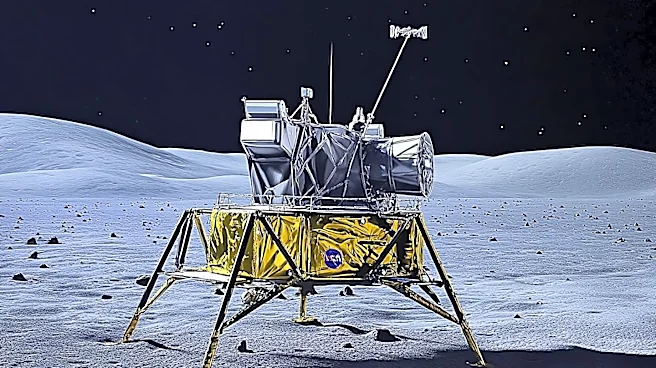
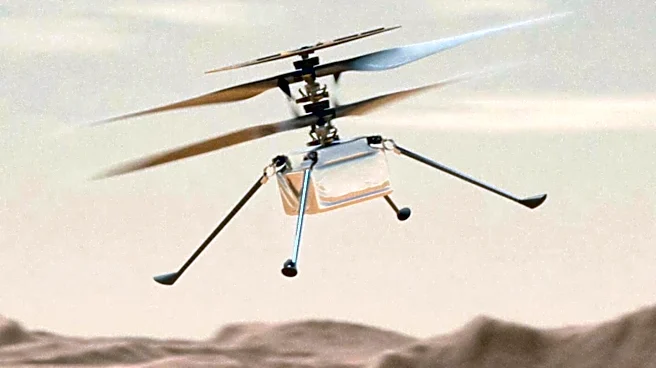
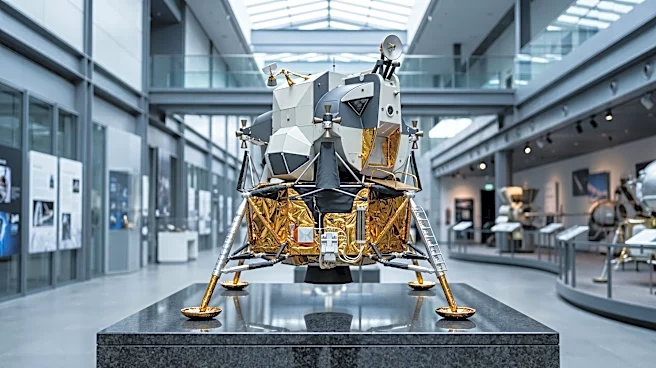
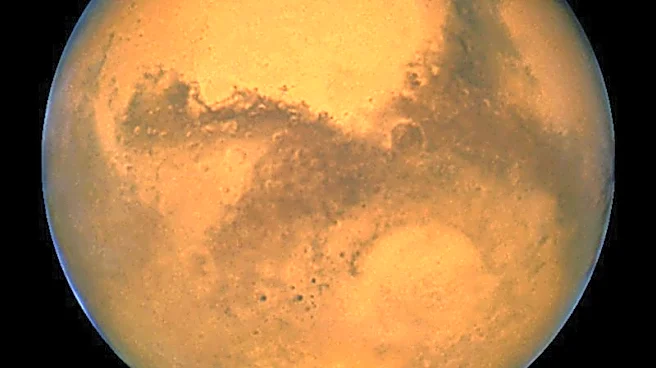
and solar system exploration to visitors through artifacts, interactive exhibits, and stories from Caltech and JPL experts. The experience will be housed in the Kent Kresa Space Gallery, one of three main galleries in the new 200,000-square-foot expansion. The gallery will showcase how NASA’s robotic missions have advanced scientific understanding of Earth, the Moon, and the broader solar system, and how technologies developed at Caltech and JPL contribute to scientific discovery. Exhibits will feature machines used for space exploration, including telescopes and robots designed for planetary travel. The display will include a restored Ranger lunar probe and full-scale models or replicas of six decades of JPL robotic exploration, such as the Mariner IV spacecraft, Viking lander, Sojourner Mars rover, Mars Exploration Rover, Mars 2020 Perseverance rover, and the Ingenuity Mars Helicopter. Visitors will also engage in hands-on activities, like programming a miniature Mars rover and building a robotic spacecraft.
Why It's Important?
This collaboration is significant for public engagement in science and technology, particularly in the field of space exploration. By providing direct access to artifacts and interactive exhibits, the Samuel Oschin Air and Space Center aims to stimulate curiosity and inspire future generations in science, engineering, and exploration. The partnership leverages the extensive history and expertise of Caltech and JPL, which have been at the forefront of space discovery for 90 years. The center's focus on robotic exploration highlights the critical role of uncrewed missions in expanding humanity's understanding of the universe. For the U.S., this initiative reinforces its leadership in space science and education, potentially fostering a new wave of STEM professionals. The integration of historical context with future possibilities, such as the snake-like EELS robot, demonstrates the continuous evolution of space technology and its impact on scientific advancement.
What's Next?
The Samuel Oschin Air and Space Center is scheduled to open to the public on November 13, 2026. This opening marks the third and final phase of the California Science Center’s three-decade master plan to establish a leading science learning institution. Advance reservations for the center, including the Space Shuttle Endeavour display, are strongly encouraged due to anticipated demand, with a $4 reservation service fee per person, waived for California Science Center members. The center will feature 100 artifacts and 100 hands-on exhibits across its three multilevel galleries. The Space Shuttle Endeavour will be displayed vertically in a launch configuration with authentic solid rocket boosters and the external tank ET-94, offering a unique viewing experience of a complete space shuttle system. The collaboration is expected to continue inspiring visitors and contributing to the public's understanding of space exploration.
Beyond the Headlines
The long-standing relationship between the California Science Center and JPL, spanning four decades, underscores the importance of institutional partnerships in advancing public education and scientific literacy. This initiative goes beyond mere exhibition by integrating interactive elements and expert insights, transforming passive viewing into active learning. The emphasis on robotic exploration also subtly highlights the ethical and practical considerations of space travel, particularly the use of autonomous systems for missions that are too dangerous or costly for human crews. Furthermore, the center's role in showcasing technologies developed for space exploration that also have terrestrial applications demonstrates the broader societal benefits of investing in space science. This educational model could serve as a blueprint for other institutions seeking to engage the public with complex scientific endeavors, fostering a deeper appreciation for the ingenuity and perseverance required for space exploration.