
What's Happening?
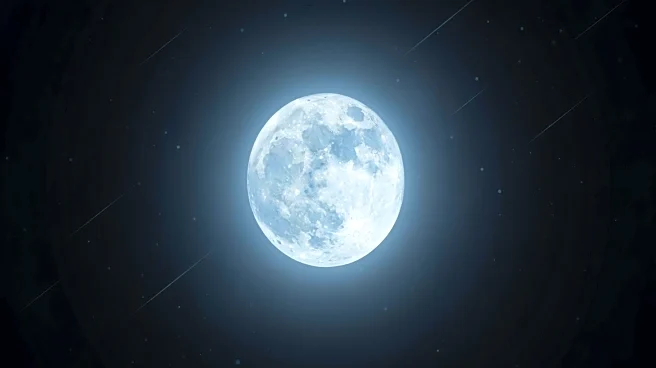
The Quadrantid meteor shower peaks on January 3, 2026, but its visibility will be significantly reduced by the bright light of the Wolf Moon, a Full Supermoon. The Quadrantids, known for producing up to
200 meteors per hour under ideal conditions, will be overshadowed, with only the brightest meteors visible. The shower originates from asteroid fragments entering Earth's atmosphere, and its radiant point is near the Big Dipper in the Ursa Major constellation. The Wolf Moon, named for the howling of wolves during winter scarcity, will dominate the night sky.
Why It's Important?
The overlap of the Wolf Moon and the Quadrantid meteor shower presents a unique celestial event, though it diminishes the meteor shower's visibility. This highlights the challenges astronomers and stargazers face when observing celestial phenomena under bright moonlight. The event underscores the importance of timing and conditions in astronomical observations. It also serves as an educational opportunity to learn about the interactions between different celestial events and their impact on visibility, fostering public interest in astronomy.