





What's Happening?
The European Investment Bank (EIB) has signed a €630 million financing agreement with Romania for the significant upgrade of the Brașov–Sighișoara railway line. This project involves modernizing 113 kilometers of double-track, electrified railway in central
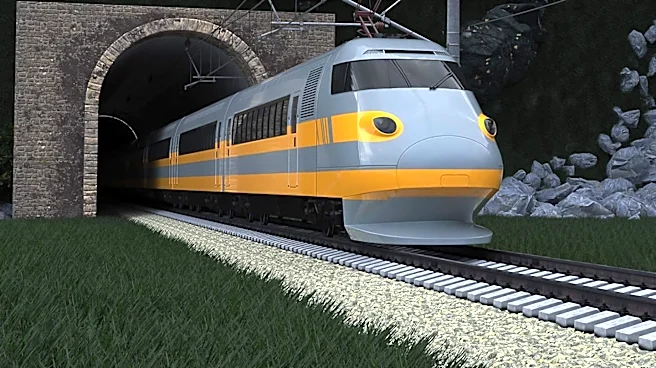
Romania. The total estimated cost for the entire project is €2.25 billion, with additional funding coming from EU instruments and national state contributions. The upgrade aims to enhance the railway's capacity for both passenger and freight traffic, improve travel times, and increase overall reliability and safety. Once completed, the line will be able to accommodate passenger trains at speeds up to 160 km/h and freight trains at up to 120 km/h. The project is expected to facilitate approximately 4 million passengers and 6 million tonnes of freight annually, with capacity for up to 29 passenger and 22 freight trains daily. This railway segment is a critical part of the Rhine-Danube and Baltic Sea–Black Sea–Aegean Sea Trans-European Network-Transport (TEN-T) corridors.
Why It's Important?
This investment is crucial for strengthening Romania's transportation infrastructure and its integration into the broader European railway network. By upgrading this strategic railway, the EIB aims to remove a significant bottleneck on key European transport corridors, thereby improving connectivity and facilitating trade across Central and Eastern Europe. The project supports a modal shift from road to rail, which is vital for reducing congestion, road accidents, noise, pollution, and greenhouse gas emissions, aligning with broader European environmental policy goals. Enhanced rail capacity and efficiency will benefit regional economies by providing more reliable logistics channels, reducing transit times, and improving supply chain resilience. This infrastructure development is expected to create economic opportunities for businesses and regions, contributing to Romania's long-term economic potential and competitiveness within the EU.
What's Next?
The upgrade of the Brașov–Sighișoara railway is set to proceed with the substantial funding from the EIB, alongside contributions from EU funds and the Romanian state budget. The project will involve extensive civil engineering works, installation of new electrical infrastructure, and the implementation of the European Rail Traffic Management System Level 2 to ensure safer and interoperable rail operations. Improved stations and stops are also planned to enhance accessibility, including for individuals with disabilities and reduced mobility. Upon completion, the modernized railway will significantly increase the efficiency and capacity of rail transport in central Romania, strengthening its connections with European markets. The successful execution of this project could serve as a model for future infrastructure investments aimed at enhancing European transport networks and promoting sustainable mobility.
Beyond the Headlines
The EIB's financing of this railway upgrade underscores a broader European strategy to invest in sustainable and integrated transport networks. This initiative reflects a commitment to reducing the environmental impact of transportation by promoting rail over road, which is a key component of the European Green Deal. Beyond the immediate economic and logistical benefits, such projects foster greater regional cohesion and integration within the European Union, facilitating the movement of people and goods across member states. The investment also highlights the role of multilateral financial institutions like the EIB in supporting large-scale infrastructure developments that are essential for achieving long-term economic growth, environmental sustainability, and strategic autonomy within the EU. This project exemplifies how coordinated European investment can address critical infrastructure gaps and contribute to a more connected and resilient continent.