


What's Happening?
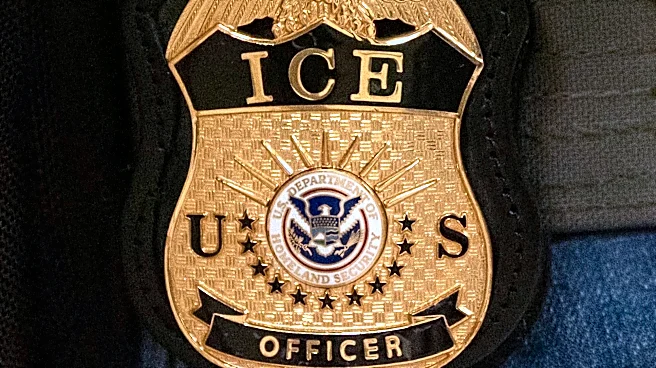
Milo Yiannopoulos, the British far-right commentator, has publicly expressed shame for his past support of President Trump after being arrested by Immigration and Customs Enforcement (ICE) officers in New Orleans and deported to the United Kingdom. Yiannopoulos described
his deportation experience as 'humiliating and disorientating,' 'physically degrading,' and 'frightening,' stating he 'didn’t really understand the physical reality of how institutionalized the brutality is in America.' The Department of Homeland Security (DHS) confirmed that Yiannopoulos had legally entered the U.S. in May 2019 but overstayed his welcome, violating U.S. laws. He was issued a final order of removal by an immigration judge on July 22 after failing to appear for his immigration hearing. Yiannopoulos, an early supporter of President Trump, had previously advocated for mass deportations and ICE checkpoints.
Why It's Important?
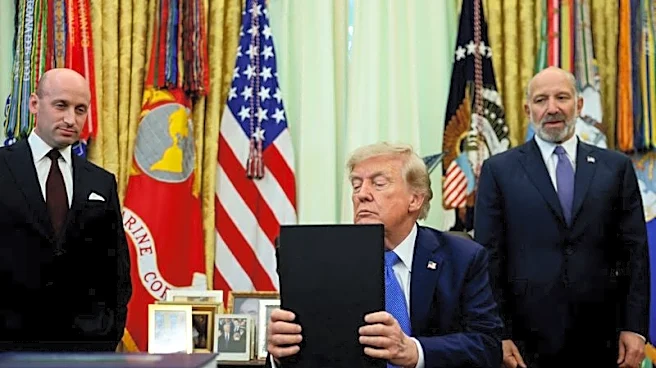
This event highlights the strict enforcement of U.S. immigration laws, even against individuals who have publicly supported the administration's immigration policies. Yiannopoulos's experience underscores that immigration regulations apply universally, regardless of political alignment or past advocacy. His public recantation of support for President Trump, stemming from his personal experience with the immigration system he once championed, could resonate with some audiences, potentially influencing perceptions of immigration enforcement. The incident also draws attention to the personal impact of deportation processes, which Yiannopoulos described as traumatic, contrasting with his previous calls for aggressive immigration crackdowns. It serves as a reminder that the U.S. immigration system can be unforgiving for those who violate its terms, regardless of their public profile.
What's Next?
Yiannopoulos has been deported to the United Kingdom, and it is unclear if or when he would be eligible to re-enter the United States. His public statements about his experience and his changed stance on President Trump's immigration policies may continue to generate discussion in media and political circles. The Department of Homeland Security and the White House have been contacted for comment on Yiannopoulos's remarks, but no official response has been provided. This event may also fuel debates about the consistency and fairness of immigration enforcement, particularly concerning individuals who have previously advocated for such policies. It could also lead to further scrutiny of the conditions and procedures within ICE detention facilities, as Yiannopoulos's account echoes common complaints from detainees.
Beyond the Headlines
This story presents a striking example of how personal experience can dramatically alter an individual's perspective on political issues. Yiannopoulos's shift from a vocal proponent of aggressive immigration enforcement to a critic after experiencing it firsthand offers a unique lens through which to view the human cost of such policies. It raises questions about empathy, the consequences of political rhetoric, and the potential for individuals to re-evaluate their beliefs when directly impacted by the systems they advocate for. The incident also subtly critiques the 'institutionalized brutality' Yiannopoulos described, suggesting that the mechanisms of enforcement can be harsh regardless of the individual's background or political leanings. This narrative could contribute to broader conversations about the ethical dimensions of immigration policy and the importance of understanding the lived experiences of those affected.