


What's Happening?
NPR highlights the significant increase in household waste during the holiday season, with a 25% rise between Thanksgiving and New Year's. The Environmental Protection Agency and experts like Dan Hoornweg emphasize the importance of understanding local
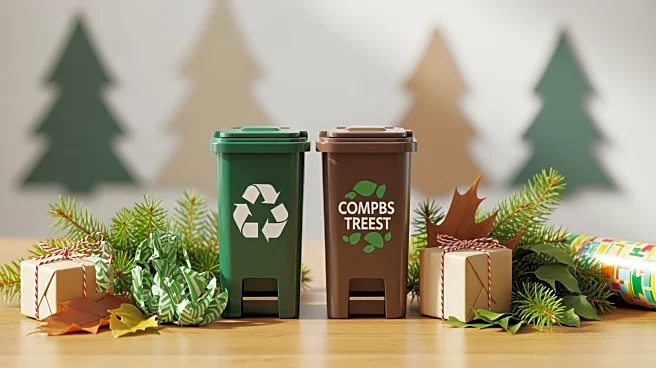
recycling policies to properly dispose of holiday waste. Cardboard, a major component of holiday waste, should be flattened and recycled. However, not all wrapping materials are recyclable, especially those with metallic or glitter coatings. Christmas trees can often be recycled into mulch, but must be free of decorations. Food waste, another significant contributor, can be composted in many areas.
Why It's Important?
Proper waste management during the holiday season is essential to minimize environmental impact. With the surge in waste, recycling and composting can significantly reduce the burden on landfills and promote environmental sustainability. Educating the public on what can and cannot be recycled helps prevent contamination of recyclable materials, ensuring more efficient processing. This not only benefits the environment but also supports local recycling programs and reduces municipal waste management costs.
What's Next?
As awareness of recycling practices increases, municipalities may enhance their recycling programs to accommodate more materials and provide clearer guidelines to residents. This could involve expanding curbside pickup services or increasing the number of drop-off locations. Additionally, public education campaigns may be launched to further inform residents about proper waste disposal, potentially leading to higher recycling rates and reduced environmental impact.