




What's Happening?
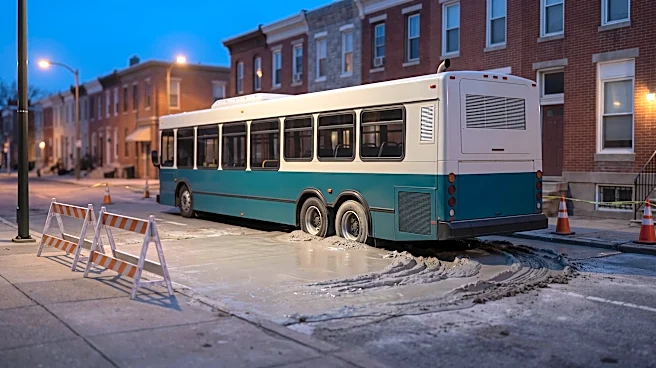
A SEPTA bus became stuck in freshly poured concrete on the 1500 block of South 8th Street in South Philadelphia on Thursday, requiring it to be towed. According to SEPTA officials, an investigation is underway to determine the circumstances surrounding
the incident. The area was undergoing concrete work, and a detour was in effect. Video footage obtained by NBC10 shows several individuals moving barriers along the roadway around 7:24 p.m., allowing the bus to proceed. However, as the bus drove over the newly laid concrete, its wheels quickly sank, immobilizing the vehicle. Following the incident, the bus was towed, and passengers were transferred to another bus. No injuries were reported in connection with the event.
Why It's Important?
This incident highlights potential issues in urban infrastructure management and public transportation operations. The fact that a public transit vehicle, carrying passengers, drove into freshly poured concrete suggests a breakdown in communication, signage, or barrier enforcement at a construction site. This not only causes significant disruption to public services, as evidenced by the need for towing and passenger transfer, but also incurs unexpected costs for repairs to the bus and the damaged concrete. For commuters, such incidents lead to delays and inconvenience, potentially eroding trust in the efficiency and reliability of public transportation systems. Furthermore, it raises questions about the safety protocols in place for road construction zones, particularly in densely populated urban areas where public and private vehicles frequently interact with ongoing infrastructure projects. The lack of injuries is fortunate, but the potential for harm in such situations underscores the importance of stringent safety measures.
What's Next?
SEPTA officials have initiated an investigation into the incident to understand how the bus entered the active construction zone and became stuck. This investigation will likely examine the placement and visibility of detour signs, the effectiveness of barriers, and the communication protocols between construction crews and public transit operators. The findings of this investigation could lead to revised safety procedures, improved signage, or enhanced coordination efforts for future roadwork projects involving public transportation routes. There may also be discussions regarding liability for the damage to the bus and the concrete, which could involve SEPTA, the construction company, or other responsible parties. Depending on the outcome, new training or awareness campaigns for bus operators regarding construction zone navigation might be implemented to prevent similar occurrences.
Beyond the Headlines
Beyond the immediate disruption, this event underscores the broader challenges of maintaining and upgrading urban infrastructure while minimizing impact on daily life. Philadelphia, like many older U.S. cities, faces continuous demands for infrastructure repair and modernization. Incidents like this highlight the delicate balance between necessary construction and ensuring public safety and operational continuity. It also brings to light the potential for human error or misjudgment in dynamic environments like construction sites, even with established protocols. The public's reaction, often characterized by frustration over delays, can also reflect a deeper sentiment about the efficiency of city services and infrastructure projects. This event could serve as a case study for urban planners and transportation authorities to refine their strategies for managing construction impacts on public transit, emphasizing clear communication, robust safety measures, and efficient incident response.