

What's Happening?
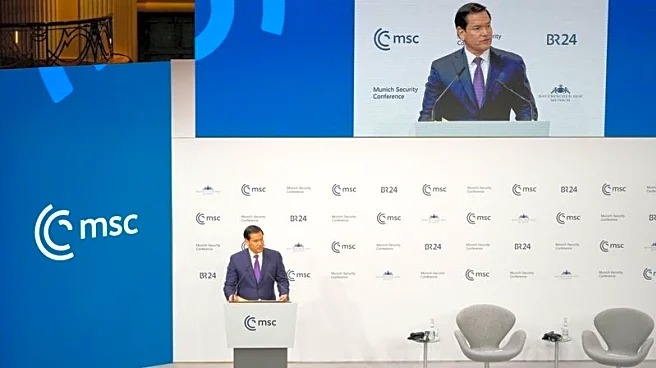
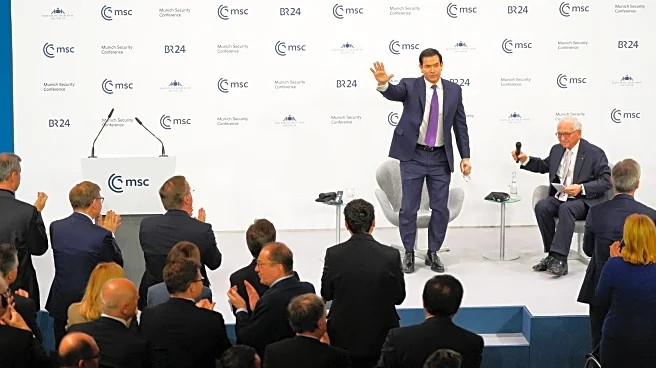
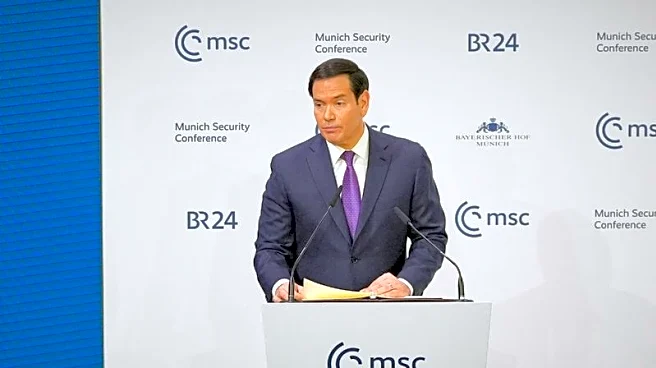
Jens-Frederik Nielsen, the Prime Minister of Greenland, is at the center of geopolitical discussions at the Munich Security Conference. Greenland has become a focal point due to President Trump's interest in acquiring the territory, despite its autonomous
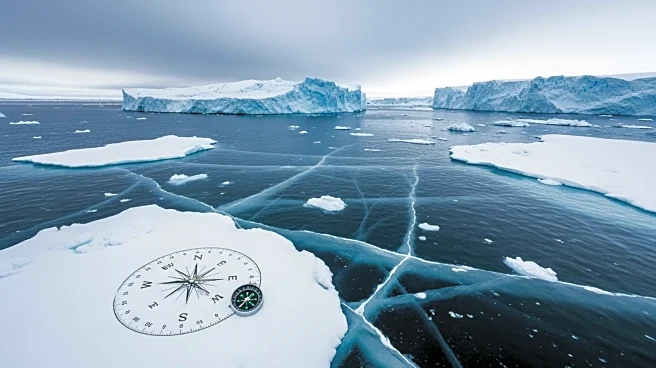
status under Denmark. Nielsen has firmly rejected any notion of ceding territory, emphasizing Greenland's sovereignty. The U.S. has shown interest in increasing its military presence in Greenland, which is strategically located in the Arctic. The situation has drawn attention from European and NATO leaders, as well as increased diplomatic and economic interest in Greenland.
Why It's Important?
Greenland's strategic location and natural resources make it a significant geopolitical interest for the U.S. and other global powers. President Trump's interest in Greenland highlights the broader Arctic geopolitical dynamics, where climate change is opening new shipping routes and access to resources. Greenland's stance on maintaining sovereignty is crucial for its national identity and economic future. The situation also reflects the complexities of U.S.-European relations and the balance of power in the Arctic region. Increased military presence and diplomatic engagement could reshape regional security and economic strategies.
What's Next?
Negotiations between Greenland, Denmark, and the U.S. are likely to continue, focusing on military cooperation and economic investments. Greenland may seek to leverage its position to attract sustainable development and infrastructure projects. The international community will closely monitor the situation, as any changes in Greenland's status could have broader implications for Arctic governance and security. The outcome of these discussions could influence future U.S. foreign policy and its approach to Arctic affairs.