






What's Happening?
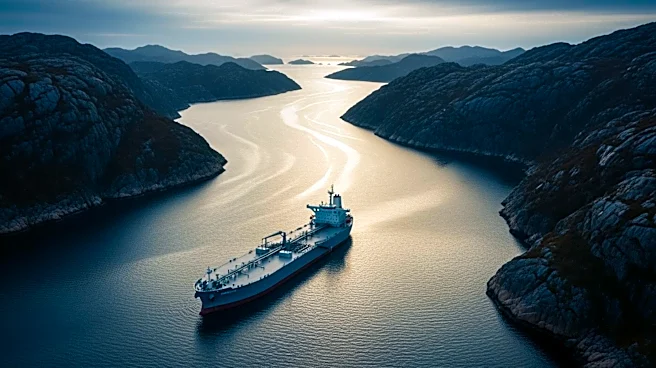
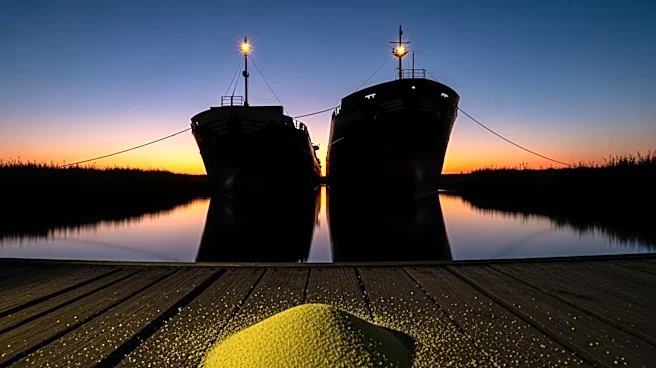
The ongoing closure of the Strait of Hormuz is primarily viewed as an energy crisis, but its impact on agriculture is becoming increasingly concerning. The Strait is a crucial passage for fertilizers and their components, such as urea, ammonia, sulphur,
and phosphorus, which are essential for modern agriculture. The disruption in the supply of these materials could lead to significant agricultural setbacks, including lower crop yields and increased food prices. The International Chamber of Commerce's Secretary General, John W.H. Denton, highlights the risk of a systemic agrifood shock if the closure persists beyond 90 days. This could result in a severe food-price crisis within six to twelve months, affecting both developed and developing nations. The situation is exacerbated by rising urea prices and deteriorating fertilizer affordability, which are already impacting farmers in the United States and other import-dependent economies.
Why It's Important?
The closure of the Strait of Hormuz poses a significant threat to global food security. Fertilizers are critical for maintaining crop yields, and any disruption in their supply can lead to reduced agricultural output and higher food prices. This situation could have dire consequences for countries that rely heavily on imported food and fuel, particularly those with limited fiscal capacity and populations already burdened by inflation. The potential for a widespread agrifood shock underscores the need for urgent action to reopen trade routes and ensure the continued flow of essential agricultural inputs. Failure to address this issue could result in long-term economic instability and increased food insecurity worldwide.
What's Next?
To mitigate the impact of the Strait's closure, governments are urged to establish a protected shipping lane for fertilizers and essential inputs, supported by transparent and reliable deconfliction processes. This would help ensure the safe and timely movement of these critical materials. Additionally, multilateral institutions should provide trade finance, emergency credit, and targeted support to import-dependent countries to prevent them from being priced out of the market. It is crucial to avoid export restrictions, which could exacerbate market scarcity and price spikes. The focus should be on maintaining market flows and supporting farmers to prevent a crop-yield crisis.
Beyond the Headlines
The closure of the Strait of Hormuz highlights the interconnectedness of global trade and agriculture. It serves as a reminder of the vulnerabilities in food systems and the importance of timely interventions to prevent crises. The situation also underscores the need for international cooperation and the role of multilateral institutions in supporting countries facing economic and food security challenges. As the world grapples with this disruption, it is essential to prioritize agricultural timelines and ensure that decisions made today do not lead to future crises.