


What's Happening?
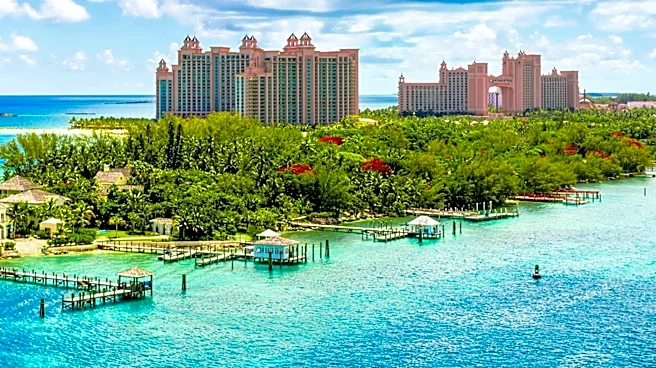
The Bahamas is an independent nation, a member of the Commonwealth realm, with its own government and laws, despite close cultural and economic ties with the United States. Located approximately 50 miles off the coast of Florida, the archipelago operates
as a sovereign state with its own Prime Minister, legal system, and membership in international organizations such as the United Nations and the Organization of American States (OAS). The Bahamas gained independence from British colonial rule on July 10, 1973, following a peaceful transition. This status is enshrined in its constitution and recognized by the global community, allowing it full control over its internal and external affairs. The nation maintains diplomatic relations with countries worldwide, including the U.S., with embassies in both Nassau and Washington, D.C. This clarifies that the Bahamas is not a U.S. territory or state, a distinction central to international law and diplomacy.
Why It's Important?
Understanding the sovereign status of the Bahamas is crucial for U.S. travelers, businesses, and policymakers. For travelers, it means adhering to Bahamian laws, entry requirements, and cultural norms, as the Bahamas is not subject to U.S. domestic law. For U.S. businesses, particularly those in tourism, finance, and trade, it necessitates navigating bilateral agreements and respecting the Bahamian government's sovereign rights. The U.S. is a major investor in Bahamian real estate and tourism, and approximately 80% of tourists visiting the Bahamas are from the United States. This relationship is one between two sovereign equals, not a political integration. Misconceptions about the Bahamas being a U.S. territory can lead to diplomatic friction, legal confusion, and incorrect assumptions about jurisdiction and responsibility, impacting trade frameworks and international cooperation on issues like counter-narcotics and disaster response.
What's Next?
The continued recognition of the Bahamas as an independent nation will reinforce the existing framework of diplomatic relations between the two countries. The U.S. will continue to respect the Bahamas' sovereignty, and any future engagements will be conducted under the principles of international law governing relations between independent states. This includes ongoing cooperation on security, trade, and cultural exchange, facilitated by their respective diplomatic missions. Travelers from the U.S. will continue to require passports or enhanced driver's licenses for re-entry, emphasizing the border between the two nations. The Bahamas will also continue its active participation in international bodies like the United Nations and the OAS, asserting its independent voice on the global stage and engaging in regional diplomacy and security discussions.
Beyond the Headlines
The persistent misconceptions about the Bahamas' political status highlight a broader challenge in public understanding of international relations and sovereignty, particularly concerning nations with close geographical and economic ties. The use of the U.S. dollar as a pegged currency and the high volume of U.S. tourism often contribute to these misunderstandings, despite clear legal and historical facts. This situation underscores the importance of accurate information in fostering respectful international relations and preventing assumptions that could undermine a nation's autonomy. The Bahamas' journey to independence and its active role in global governance serve as a testament to successful decolonization and the establishment of a distinct national identity, even while maintaining strong partnerships with larger neighbors.