




What's Happening?
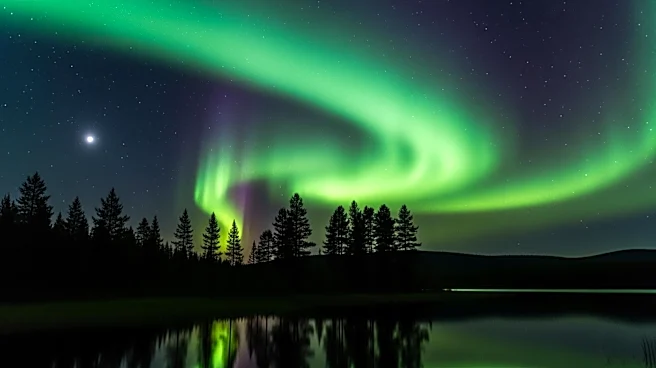
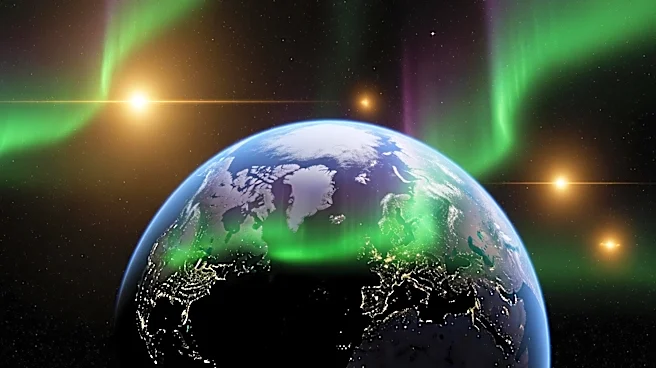
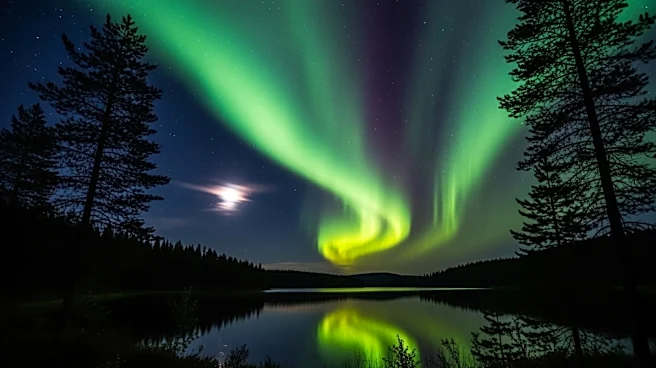
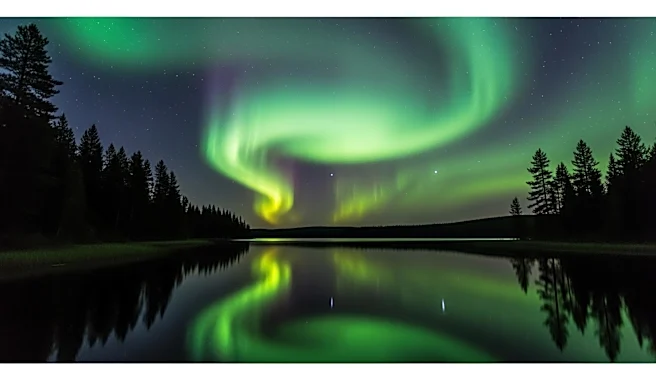
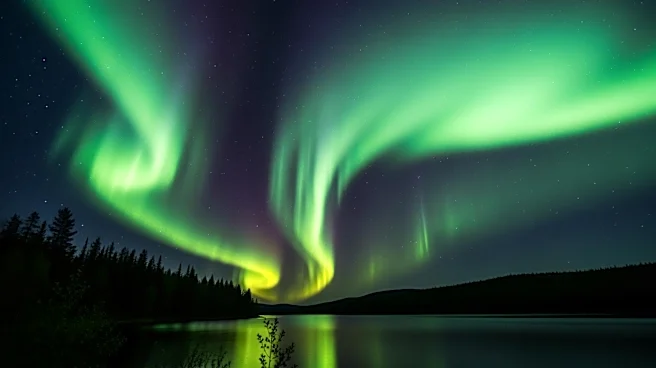
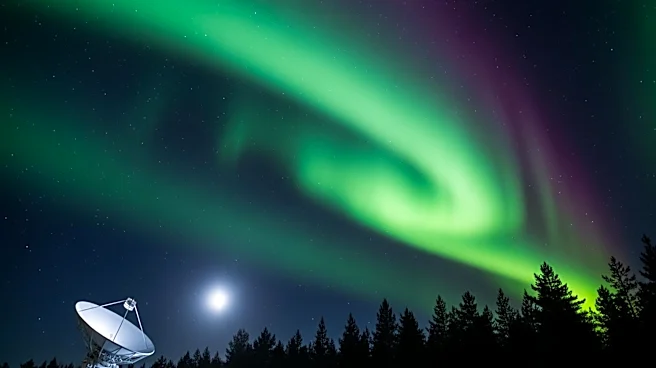
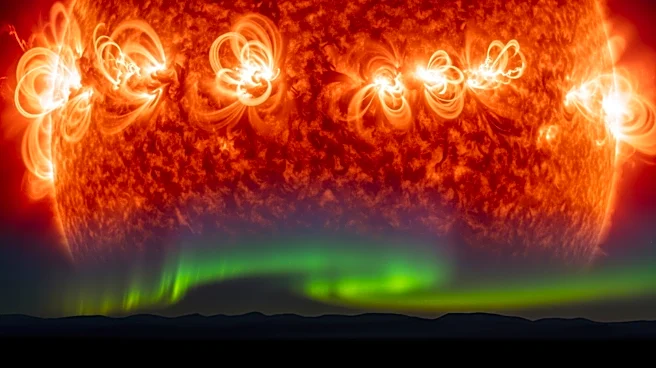
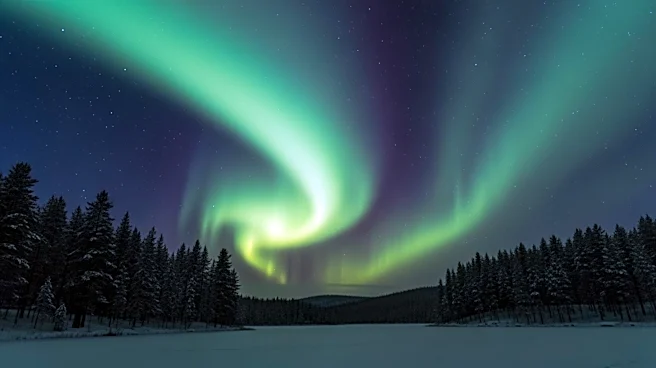
The D.C. region may witness a rare display of northern lights on Thursday night, contingent on favorable space weather conditions. The National Oceanic and Atmospheric Administration's Space Weather Prediction Center has issued a G3 geomagnetic storm
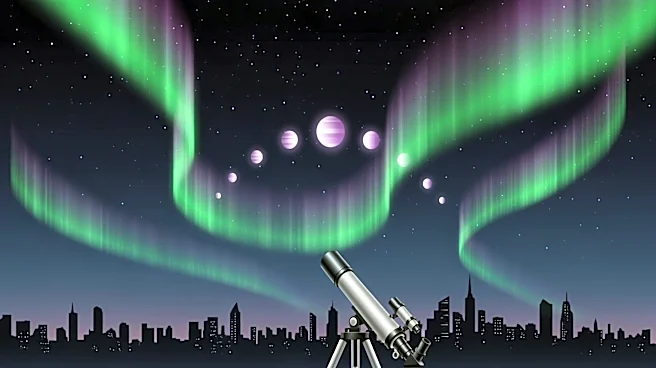
watch, predicting the arrival of a 'Cannibal Coronal Mass Ejection' (CME) that could trigger auroras visible in the area. This phenomenon occurs when a fast-moving CME overtakes a slower one, potentially causing strong geomagnetic storms. The event coincides with a planetary alignment of Jupiter, Venus, and Mercury, offering a unique celestial spectacle. Observers are advised to monitor updates from NOAA and other space-related websites for optimal viewing conditions.
Why It's Important?
The potential visibility of the northern lights in the D.C. region is significant due to its rarity at such latitudes. This event highlights the impact of solar activity on Earth's geomagnetic environment, which can affect satellite operations, power grids, and communication systems. For the public, it presents an opportunity to engage with natural phenomena that are typically confined to higher latitudes. The event also underscores the importance of space weather forecasting in mitigating risks associated with solar storms.
What's Next?
Observers are encouraged to find locations with clear northern horizons and minimal light pollution to maximize their chances of witnessing the auroras. The use of cameras or smartphones with long exposure settings is recommended to capture the event. Continued monitoring of space weather updates will be crucial, as conditions can change rapidly. The event may also prompt discussions on the need for improved infrastructure resilience against geomagnetic disturbances.