
What's Happening?
Jared Kushner, President Trump's son-in-law and Middle East adviser, has presented a vision for rebuilding Gaza into a modern city with high-rises, a new port, and tourism areas. This plan was unveiled
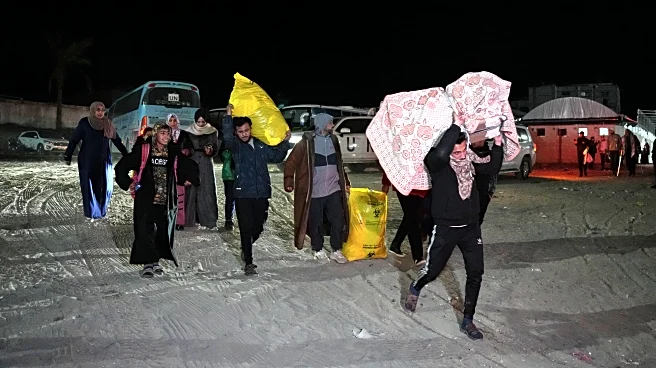
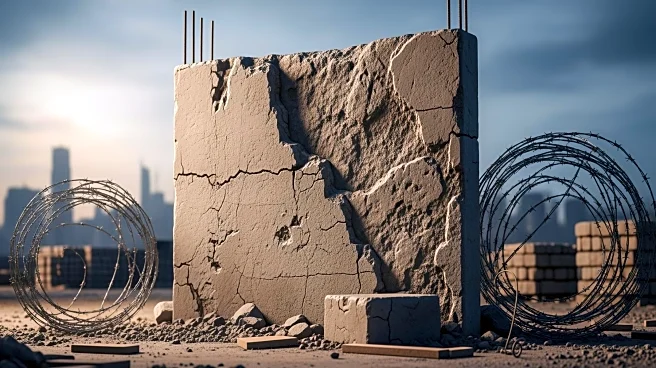
at an economic forum in Davos, Switzerland. Kushner's proposal includes constructing new roads, an airport, and residential areas interspersed with parks and sports facilities. However, the plan's success hinges on achieving security in Gaza, a region devastated by over two years of conflict between Israel and Hamas. The United Nations estimates that clearing the 60 million tons of rubble in Gaza will take over seven years, with additional time needed for demining. The reconstruction plan also depends on the demilitarization of Hamas, a process that remains uncertain.
Why It's Important?
The reconstruction of Gaza is crucial for the region's stability and economic recovery. Kushner's plan aims to attract investors and stimulate job growth, which could significantly improve living conditions for Gaza's 2 million residents. However, the plan's reliance on security and the disarmament of Hamas presents significant obstacles. Without security, investors may be reluctant to engage, and the reconstruction process could stall. The plan also faces political challenges, as Israel's acceptance of high-rise buildings near its border is unlikely, and the involvement of the Palestinian Authority is opposed by Israeli Prime Minister Benjamin Netanyahu. The success of this plan could set a precedent for future peace and development efforts in conflict zones.
What's Next?
The next steps involve addressing the security concerns and negotiating the disarmament of Hamas. The Board of Peace, which oversees the ceasefire and reconstruction, will need to work closely with Israeli and Palestinian authorities to ensure a stable environment for rebuilding. The plan's progress will depend on the cooperation of various stakeholders, including international organizations and local groups. The timeline for reconstruction remains uncertain, and the plan's feasibility will be tested as efforts to clear rubble and begin construction unfold. The international community will be watching closely to see if this ambitious plan can overcome the significant challenges it faces.
Beyond the Headlines
Kushner's plan raises questions about the ethical and cultural implications of transforming Gaza into a modern city. The displacement of residents during reconstruction and the potential loss of cultural heritage sites are concerns that need to be addressed. Additionally, the plan's focus on tourism and advanced manufacturing may not align with the immediate needs of Gaza's population, who require basic services and infrastructure. The long-term success of the plan will depend on balancing economic development with the preservation of Gaza's cultural identity and addressing the humanitarian needs of its residents.