
What's Happening?
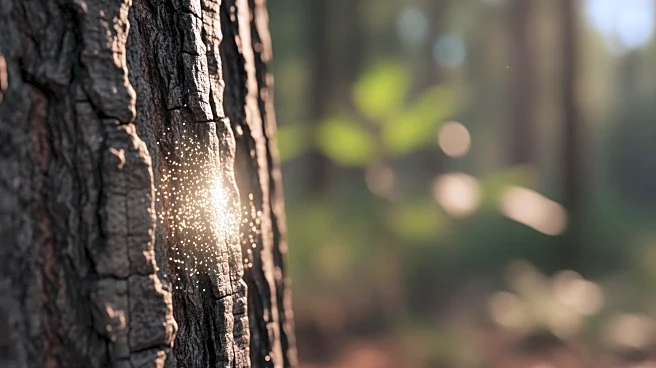
New research has uncovered the significant role of tree bark microbiomes in regulating greenhouse gases. The study, conducted by scientists in Australia, found that the surface area of tree bark globally
is comparable to the Earth's total land area, providing a vast habitat for microbial life. These microbes can absorb or emit gases like hydrogen, carbon monoxide, and methane, which influence climate change. The research highlights the potential of tree bark to act as a carbon sink, absorbing significant amounts of atmospheric hydrogen. This discovery suggests that tree bark plays a more active role in the Earth's climate system than previously understood.
Why It's Important?
This research could reshape our understanding of natural carbon sinks and their role in mitigating climate change. By identifying tree bark as a significant player in greenhouse gas regulation, the study opens new avenues for climate science and conservation strategies. It suggests that preserving and managing forests could have a more profound impact on climate change mitigation than previously thought. This could influence environmental policies and conservation efforts, emphasizing the importance of protecting diverse tree species and their habitats.