

What's Happening?
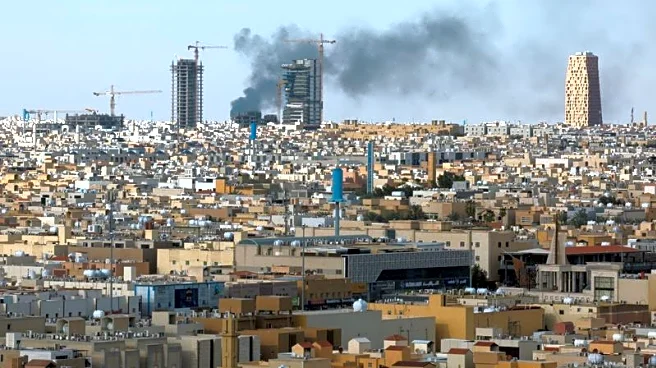
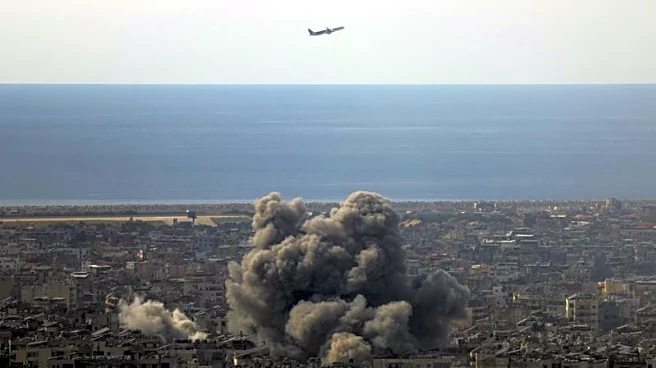
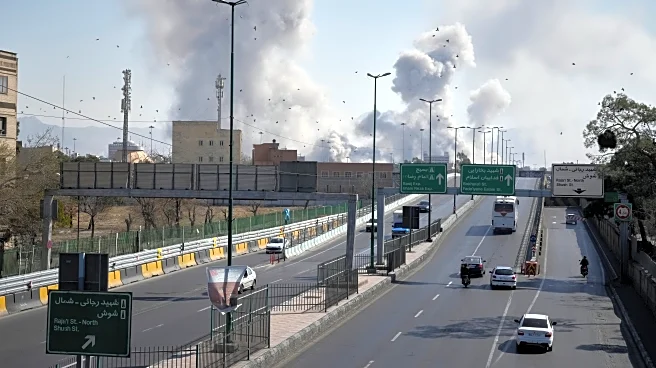
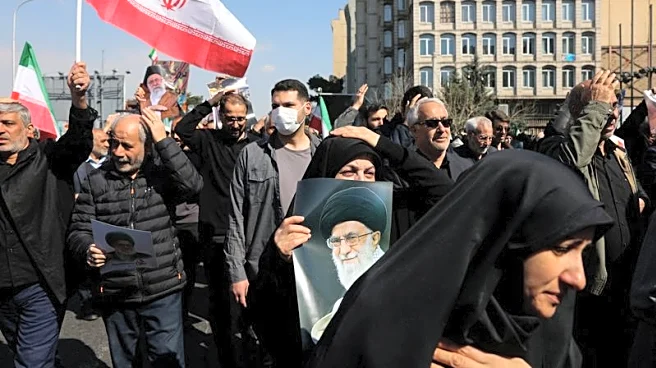
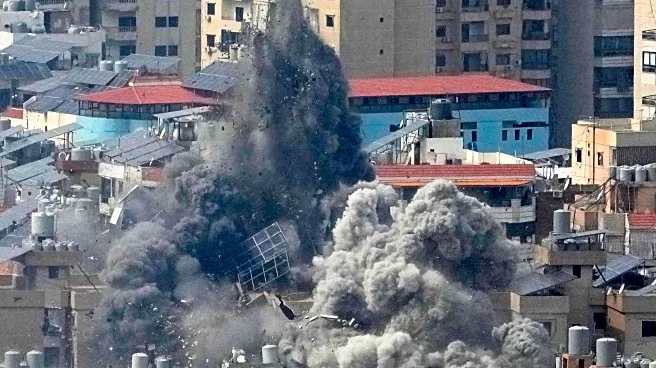
Iran is experiencing significant internal and external pressures following the death of Supreme Leader Ayatollah Ali Khamenei, who was killed in a US-Israeli military operation. The operation targeted key military sites in Iran, leading to retaliatory
strikes by Iran against Israel and Gulf Arab states hosting US forces. Iranian President Masoud Pezeshkian issued an apology to neighboring countries for these retaliatory actions, citing the absence of leadership as a reason for the military's autonomous response. The interim Assembly of Experts in Iran is under pressure to swiftly appoint a new leader, as the leadership vacuum has intensified internal power struggles among various factions vying for influence.
Why It's Important?
The ongoing conflict and leadership crisis in Iran have significant implications for regional stability and global politics. The US and Israeli military actions aim to weaken Iran's nuclear capabilities and military strength, but not to instigate regime change. The situation has escalated tensions across the Middle East, prompting evacuations and military reinforcements by European nations. The instability has also affected global markets, with potential disruptions in oil supply and increased geopolitical risks. The leadership vacuum in Iran presents a critical juncture for the country's future, as different factions within the regime compete for power, potentially altering Iran's domestic and foreign policies.
What's Next?
The Assembly of Experts is expected to select a new leader soon, with potential candidates including Khamenei's son Mojtaba and senior cleric Ayatollah Alireza Arafi. The decision will be crucial in determining Iran's direction amid ongoing military pressures. The international community, particularly the US and its allies, will closely monitor the situation, as the new leadership could influence Iran's approach to regional conflicts and nuclear negotiations. The outcome may also impact US-Iran relations and the broader geopolitical landscape in the Middle East.
Beyond the Headlines
The leadership crisis in Iran highlights deeper issues within the regime, including factionalism and the struggle for power. The situation underscores the challenges of governance in a theocratic system where religious and political authority are intertwined. The crisis also raises questions about the future of Iran's revolutionary ideals and its role in the region. The international response, particularly from the US and Israel, will be pivotal in shaping the outcome of this crisis and its long-term implications for regional stability.