







What's Happening?
China and Russia have vetoed a United Nations Security Council resolution aimed at coordinating efforts to protect commercial shipping in the Strait of Hormuz. The resolution, proposed by Bahrain, was supported by 11 members but failed due to the vetoes
from China and Russia, who argued that the measure was biased against Iran. The United States condemned the vetoes, with U.S. Ambassador Mike Waltz criticizing the move as a support for Iran's actions, which have disrupted global shipping and energy supplies. The resolution had been softened to remove any authorization for the use of force, focusing instead on encouraging defensive coordination among states. Despite these changes, China and Russia maintained their opposition, proposing an alternative resolution addressing broader Middle East issues.
Why It's Important?
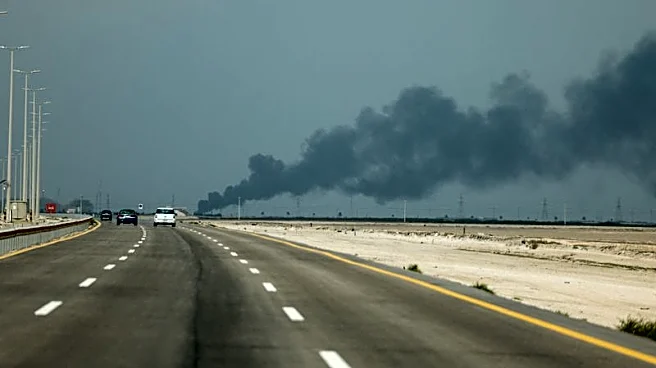
The vetoes by China and Russia highlight the geopolitical complexities surrounding the Strait of Hormuz, a critical chokepoint for global oil and gas shipments. The U.S. views the closure of the strait by Iran as a significant threat to global economic stability, affecting energy prices and supply chains. The failure to pass the resolution underscores the challenges in achieving international consensus on security measures in the region. The situation also reflects broader tensions between the U.S. and Iran, with potential implications for international relations and global energy markets.
What's Next?
The U.S. has called on other nations to join in securing the Strait of Hormuz, suggesting a potential coalition of naval forces to ensure the waterway remains open. Meanwhile, the UN Secretary-General's envoy is en route to Tehran for consultations, indicating ongoing diplomatic efforts to resolve the crisis. The situation remains volatile, with the potential for further escalation if Iran continues to restrict access to the strait.