




What's Happening?
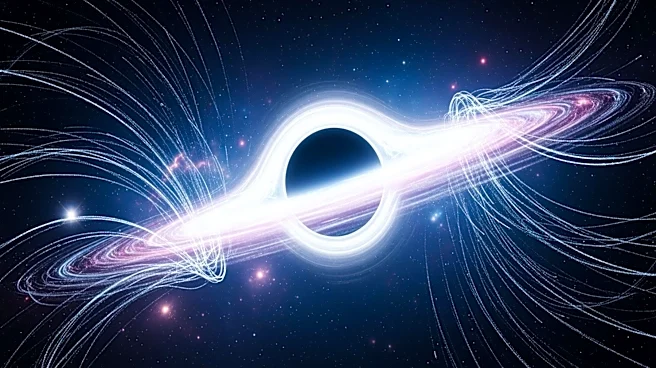
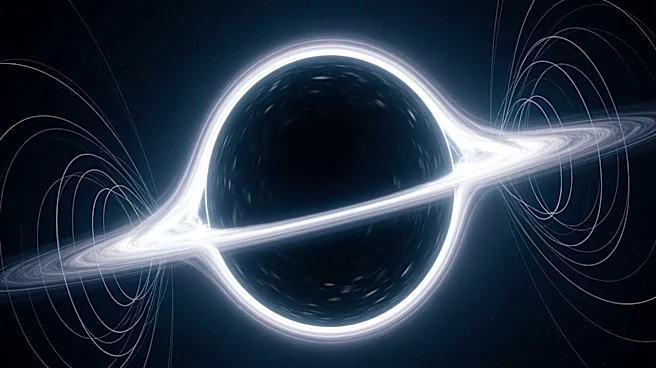
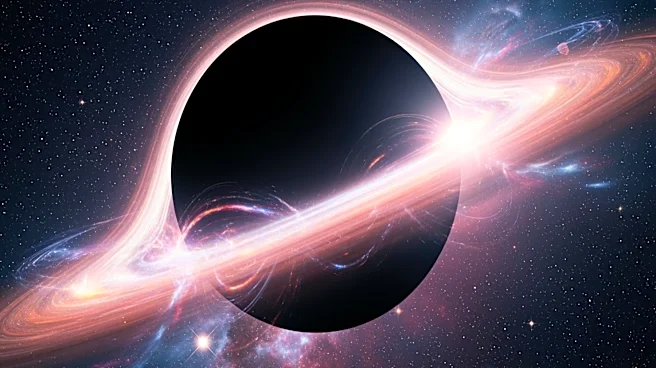
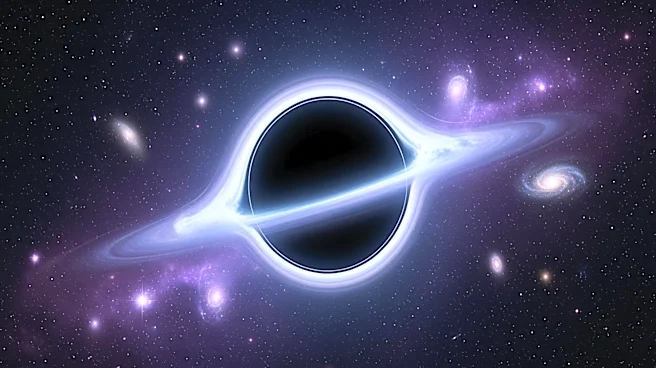
A new scientific hypothesis suggests that black holes, particularly those formed immediately after the Big Bang, could transform into white holes. This transformation occurs when a black hole reaches the Planck mass, becoming stable and emitting cleansing
radiation. This radiation is indicative of a white hole, which repels rather than absorbs matter and radiation. The hypothesis, proposed by Daniel Paraizo and his team, challenges previous understandings of black holes and suggests a need for a unified theory of quantum gravity.
Why It's Important?
This hypothesis could revolutionize our understanding of black holes and the fundamental laws of physics. If proven, it would provide insights into the nature of dark matter and the early universe. The concept of white holes could also have implications for theoretical physics, potentially leading to new discoveries about the universe's structure and behavior. This research underscores the importance of continued exploration in quantum mechanics and general relativity, fields that are crucial for advancing our knowledge of the cosmos.
What's Next?
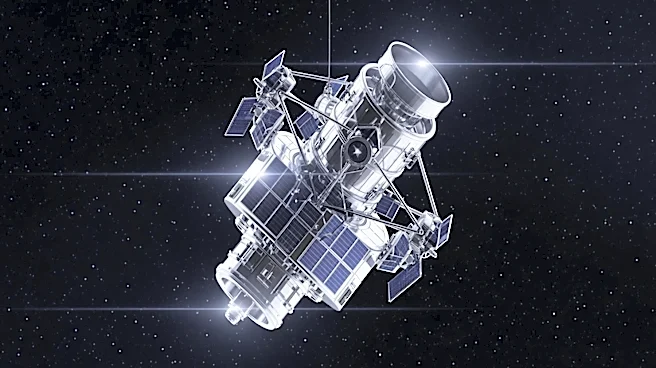
The hypothesis is currently in the preprint stage and has not yet undergone peer review. Further research and experimentation are needed to validate these findings. The scientific community may focus on developing a theory of quantum gravity that unifies quantum mechanics and general relativity, which could provide a more comprehensive understanding of these phenomena. Observational evidence, possibly from advanced telescopes or space missions, will be crucial in testing the validity of this hypothesis.