



What's Happening?
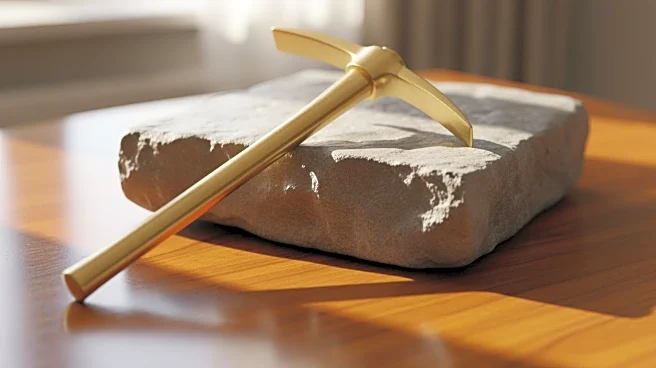
Axis International, a mining company based in the United Arab Emirates, is seeking arbitration from the World Bank against Guinea for revoking its license to operate a major bauxite mine. The mine, which is Guinea's second-largest, has reserves exceeding
800 million tonnes. The withdrawal is part of a broader move by Guinea's junta, which has canceled numerous mining licenses since a 2021 coup. Axis International is demanding $28 billion in compensation, claiming the junta ignored attempts for an amicable settlement. The company disputes Guinea's claim that the mine was under-exploited. The junta, led by General Mamady Doumbouya, has prioritized exploiting Guinea's mining resources, including launching operations at the Simandou iron ore deposit.
Why It's Important?
The dispute underscores the challenges faced by international companies operating in politically unstable regions. Guinea's actions reflect a broader trend of resource nationalism, where governments seek greater control over natural resources. This can deter foreign investment, impacting economic development and infrastructure improvements. The situation also highlights the potential for legal and financial risks for companies in the mining sector. For Guinea, the focus on resource exploitation is critical for economic growth, but equitable distribution of income remains a challenge, with much of the wealth not reaching the local population.
What's Next?
The arbitration process at the International Centre for the Settlement of Investment Dispute (ICSID) will be closely watched by international investors and mining companies. The outcome could influence future foreign investment in Guinea and similar regions. The political situation in Guinea remains volatile, with General Doumbouya's government facing criticism for its handling of civil liberties and economic policies. The international community may increase pressure on Guinea to ensure fair treatment of foreign investors and equitable distribution of mining revenues.