


What's Happening?
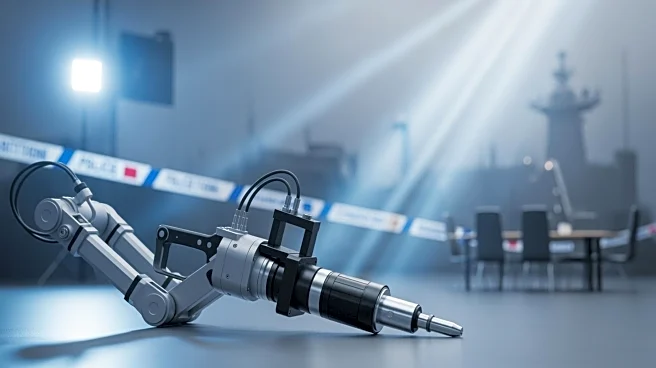
L3Harris Technologies has been awarded a contract to supply 34 explosive ordnance disposal (EOD) robots to the U.S. Navy and Marine Corps. The T7 robots, weighing 710 pounds each, are designed to safely dispose of hazardous materials and improvised explosive devices
(IEDs), thereby minimizing the risk to human operators. The contract, announced by L3Harris, marks a significant step in enhancing the safety of military personnel involved in high-risk missions. The company has not disclosed the contract's financial details but confirmed that deliveries will commence this year. This development comes amid increased scrutiny over the health impacts of 'blast overpressure' on service members, particularly those in EOD roles. Historical data indicates that EOD technicians have experienced higher rates of suicide and illness-related deaths, often linked to their exposure to explosive blasts.
Why It's Important?
The contract awarded to L3Harris is crucial for improving the safety and operational efficiency of the Navy and Marine Corps. By deploying advanced robotic systems, the military aims to reduce the physical and mental health risks associated with explosive ordnance disposal. The use of robots like the T7 can significantly decrease the exposure of service members to harmful blast overpressure, which has been linked to traumatic brain injuries and other health issues. This initiative reflects a broader commitment to leveraging technology to protect military personnel and enhance mission success. The investment in such technologies also underscores the military's focus on modernizing its capabilities to address contemporary threats effectively.
What's Next?
Following the contract award, L3Harris is set to begin delivering the T7 robots to the Navy and Marine Corps within the year. Concurrently, the Uniformed Services University of the Health Sciences is advancing research into the effects of blast overpressure, with a new phase of study involving 100 EOD personnel. These individuals will be equipped with blast sensors during operations to gather data over a two-year period. The findings from this research could inform future strategies and technologies aimed at mitigating the health impacts of explosive exposure. Additionally, the military may continue to explore and invest in further technological advancements to enhance the safety and effectiveness of its operations.
Beyond the Headlines
The deployment of EOD robots like the T7 represents a significant shift in military operations, emphasizing the role of technology in safeguarding human life. This development also highlights the ethical considerations of using robotics in warfare, balancing the need for human oversight with the benefits of automation. As the military continues to integrate such technologies, it may face challenges related to training, maintenance, and the ethical implications of autonomous systems in combat scenarios. The ongoing research into blast overpressure effects could also lead to broader changes in military training and operational protocols, potentially influencing how future conflicts are approached.