
What's Happening?
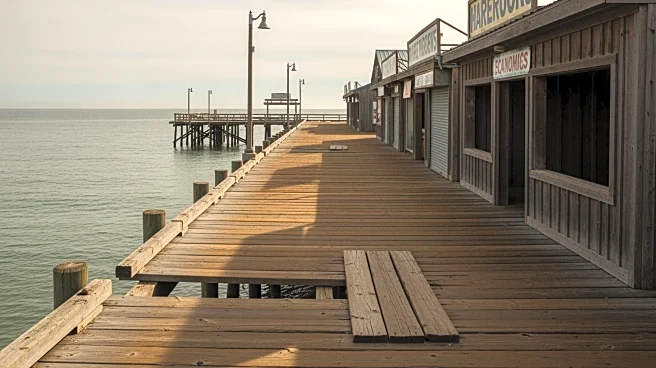
A year after the partial collapse of the Santa Cruz Wharf during a storm, local businesses are still struggling to recover. The collapse, which significantly affected the structural integrity of the wharf,
has led to a slow economic recovery for the area. Businesses that rely on the foot traffic and tourism generated by the wharf have reported ongoing financial difficulties. The wharf, a popular destination for both locals and tourists, has been a critical part of the local economy, and its partial closure has had a ripple effect on surrounding businesses. Efforts to repair and restore the wharf are ongoing, but the pace of recovery has been slower than anticipated, leaving many business owners concerned about their future.
Why It's Important?
The slow recovery of the Santa Cruz Wharf highlights the vulnerability of local economies that depend heavily on tourism and specific infrastructure. The wharf's collapse has not only affected individual businesses but also the broader economic health of the Santa Cruz area. This situation underscores the importance of infrastructure maintenance and disaster preparedness, as unexpected events can have long-lasting impacts on local communities. The ongoing challenges faced by these businesses may also influence local policy decisions regarding infrastructure investment and emergency response planning. Additionally, the situation serves as a reminder of the potential economic consequences of climate-related events, as storms and other natural disasters become more frequent and severe.
What's Next?
Efforts to fully restore the Santa Cruz Wharf are expected to continue, with local authorities and business owners working together to expedite repairs. The pace of recovery will likely depend on the availability of funding and resources, as well as the ability to implement effective repair strategies. In the meantime, businesses may seek alternative ways to attract customers and generate revenue, such as online sales or community events. The situation may also prompt discussions about diversifying the local economy to reduce reliance on a single infrastructure asset. Stakeholders, including local government and business associations, are likely to explore strategies to enhance resilience against future disruptions.