


What's Happening?
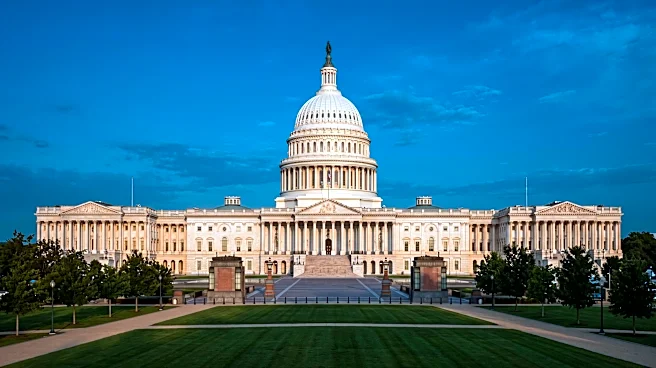
Rep. Jared Huffman (D-CA) has voiced strong opposition to two House bills, H.R. 9436 and H.R. 1501, arguing they would weaken environmental protections. H.R. 9436 proposes extending a waiver for lobster and crab fisheries, which Huffman contends could
jeopardize efforts to protect the critically endangered North Atlantic right whale. The second bill, H.R. 1501, aims to broaden fast-track permitting for mining and mineral processing projects. Huffman asserts that the existing FAST-41 process already covers mining operations and that this new measure could lead to political favoritism in the permitting process. Supporters of the fisheries bill argue it would provide necessary relief to coastal fishing communities, while those backing the mining bill emphasize the importance of streamlining resource extraction. Huffman's stance highlights a broader conflict between economic interests and environmental conservation within current legislative efforts.
Why It's Important?
This legislative debate is important because it underscores the ongoing tension between economic development and environmental conservation in the U.S. The proposed waiver for lobster and crab fisheries, while intended to support coastal communities, could have severe consequences for the North Atlantic right whale population, which currently numbers around 380 individuals. Over 85% of these whales have experienced entanglement in fishing gear, making any delay in protection efforts a critical concern. Similarly, expanding fast-track permitting for mining could accelerate resource extraction but potentially at the cost of environmental safeguards and transparent regulatory processes. The potential for political favoritism in such permitting could undermine public trust and lead to unsustainable practices. These bills reflect a national discussion on how to balance economic needs with the imperative to protect vulnerable species and natural resources, impacting both environmental policy and the livelihoods of various industries.
What's Next?
The immediate next steps involve the progression of H.R. 9436 and H.R. 1501 through the legislative process in the House. Rep. Huffman and other environmental advocates will likely continue to lobby against these bills, emphasizing their potential negative impacts on wildlife and environmental integrity. Conversely, proponents of the bills, including representatives from fishing and mining industries, will push for their passage, highlighting economic benefits and the need for regulatory efficiency. The debate may lead to amendments or further negotiations to address some of the concerns raised by opponents. Public awareness and advocacy from environmental groups could also play a significant role in shaping the outcome. The ultimate fate of these bills will depend on congressional voting and potential executive action, with implications for future environmental regulations and industry practices.
Beyond the Headlines
Beyond the immediate legislative outcomes, this situation highlights deeper implications regarding the role of scientific evidence in policymaking and the influence of special interest groups. The debate over the North Atlantic right whale's protection versus the economic viability of fisheries exemplifies the challenge of integrating scientific data on endangered species into policy decisions. The mining permit bill raises questions about the balance between national resource security and environmental stewardship, as well as the potential for regulatory capture where political influence might override environmental assessments. This legislative push could set precedents for how environmental impact assessments are conducted and how critically endangered species are protected in the face of economic pressures. It also reflects a broader ideological divide on the extent of government regulation in environmental matters and the prioritization of short-term economic gains over long-term ecological health.