








What's Happening?
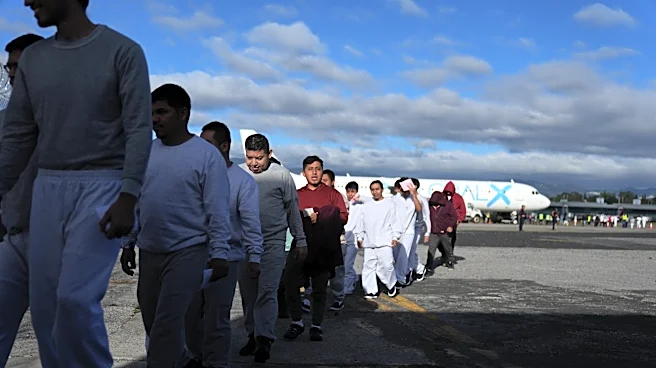
The United States has deported 20 individuals to Liberia, marking the initial phase of a new agreement under which Liberia will accept a total of 1,200 migrants. This action was reported on Thursday, with the deportees arriving in Liberia as part of the broader
arrangement between the two nations. The specific reasons for the deportations of these 20 individuals were not detailed in the source, nor were their nationalities explicitly stated beyond being migrants sent to Liberia. This development signifies a concrete step in U.S. immigration enforcement and international cooperation on migrant returns. The agreement to repatriate 1,200 migrants suggests a significant, ongoing effort to manage immigration flows and enforce deportation orders.
Why It's Important?
This deportation action and the underlying agreement are important for several reasons. For the U.S., it demonstrates a continued commitment to enforcing immigration laws and securing international cooperation for the return of individuals deemed deportable. Such agreements can serve as a model or precedent for future negotiations with other countries regarding migrant repatriation, potentially impacting U.S. foreign policy and immigration strategy. For Liberia, accepting a large number of deportees, particularly 1,200 individuals, could present significant social and economic challenges, including integration into the workforce, housing, and social services. The agreement also highlights the complex dynamics of international migration and the role of bilateral agreements in managing these challenges. The implications for the individuals deported are profound, as they face resettlement in a country that may be unfamiliar or where they have limited ties.
What's Next?
The immediate next step will involve the continued implementation of the agreement, with Liberia expected to receive the remaining migrants up to the agreed-upon total of 1,200. This process will likely unfold over a period, and its success could influence future U.S. immigration policies and international relations. Monitoring the integration of these deportees into Liberian society will be crucial, as will observing any potential social or economic impacts on Liberia. The agreement may also prompt discussions or criticisms from human rights organizations regarding the welfare of the deportees and the conditions of their return. Future U.S. administrations may review or modify such agreements based on their effectiveness and broader policy objectives.
Beyond the Headlines
Beyond the immediate logistical aspects, this event touches upon deeper ethical and legal considerations surrounding international deportations. The concept of a country agreeing to accept a large number of deportees from another nation raises questions about sovereignty, humanitarian responsibilities, and the rights of individuals who may have limited connections to the receiving country. It also highlights the global challenge of managing migration and the increasing trend of countries seeking international partners to facilitate returns. The long-term implications could include shifts in international law regarding migrant status and repatriation, as well as potential changes in how countries define and manage their migrant populations. The agreement could also influence public perception and political discourse on immigration in both the U.S. and Liberia.