
What's Happening?
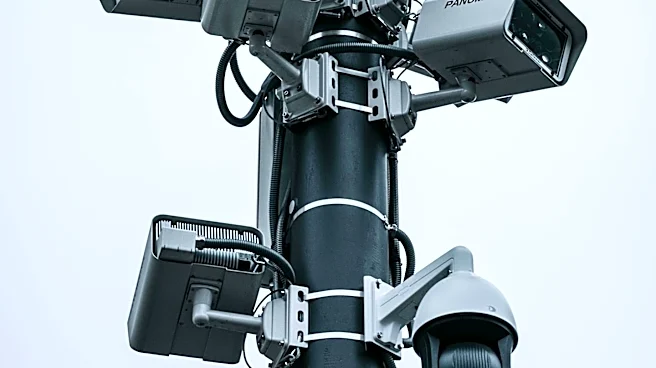
A Utah advocacy group, the Utah Civic Compact, is calling on Governor Spencer Cox to pause the operation of Flock Safety cameras on state highways. The group argues that the Utah Department of Transportation
(UDOT) has exceeded its authority by entering into license agreements with Flock Safety for camera placement, asserting that no state statute grants UDOT the power to license such vendors. While a 2023 Utah law permits UDOT to issue permits for these cameras when requested by law enforcement, the Utah Civic Compact contends that UDOT's agreements establish conditions for camera operations regardless of which law enforcement agency contracts for the services. This move follows an earlier request in October for UDOT to terminate its contract with Flock, which was then escalated to a direct appeal to Governor Cox to halt operations until new legislation is enacted. UDOT spokesperson John Gleason maintains that the department's role is limited to permitting and ensuring safe installation, not the use of the equipment itself.
Why It's Important?
This situation highlights a growing tension between public safety measures and privacy concerns in Utah, particularly regarding the use of automated license plate readers (ALPRs). The Utah Civic Compact's actions underscore a broader debate about government surveillance, data collection, and the appropriate regulatory framework for such technologies. The group's assertion that UDOT is operating beyond its statutory authority raises questions about accountability and the checks and balances within state government. If the cameras are indeed paused, it could set a precedent for how other states approach the deployment of ALPR technology, potentially leading to more stringent regulations nationwide. The controversy also impacts public trust in law enforcement and state agencies, as concerns about misuse and the scope of data collection become more prominent.
What's Next?
The Utah State Legislature is expected to address the issue of ALPR cameras in its upcoming session. Lawmakers have been studying legislative proposals, acknowledging the privacy concerns raised by the Utah Civic Compact. House Speaker Mike Schultz has indicated that the Law Enforcement and Criminal Justice Interim Committee has held multiple public hearings on Flock cameras and ALPRs, and new legislation is anticipated to protect Utahns' privacy. The Utah Civic Compact's director of policy, Jarom Gillins, has expressed a desire for all network surveillance to be paused across the state until the legislature can properly regulate these systems and clarify data handling. Governor Cox's office has not yet commented on the demand for a pause, while UDOT continues to assert its compliance with existing state law.
Beyond the Headlines
The debate over Flock cameras in Utah extends beyond immediate regulatory compliance, touching upon fundamental questions of privacy in the digital age and the evolving nature of surveillance. The revelation that a significant portion of searches for Flock Safety data in Weber County were conducted by out-of-state law enforcement agencies, which Governor Cox found 'deeply troubled,' highlights the potential for data sharing across jurisdictions and the challenges in controlling its use. Allegations of police officers in other states misusing Flock camera data for personal reasons further fuel concerns about accountability and the potential for abuse of power. This situation could prompt a re-evaluation of data ownership and control, with recommendations from the Utah Privacy Commission's task force suggesting that agencies should own and control the data, with vendors processing it only on the agency's behalf. This could lead to a broader shift in how government agencies manage and oversee third-party technology providers.