







What's Happening?
Orange County health officials have revised their previous statement regarding a chemical tank crisis at a Garden Grove aerospace company, acknowledging that vapors were indeed released. Initially, Health Officer Dr. Regina Chinsio-Kwong stated there
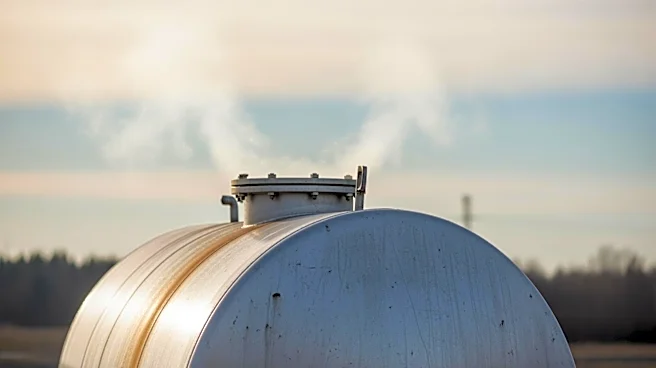
was no contamination or vapor release. However, this was contradicted by the Orange County Fire Authority, which reported a vapor release from a pressurized tank containing methyl methacrylate (MMA), a chemical used in manufacturing. The incident led to the evacuation of approximately 300 employees and a subsequent evacuation order affecting 50,000 residents. Air monitoring began on May 22, and officials have since confirmed that air quality readings remained within normal ranges, indicating no significant health risk from MMA exposure. The California Department of Public Health has stated that the health and safety risk has been eliminated.
Why It's Important?
The incident highlights the critical importance of accurate and timely communication during environmental emergencies. The initial miscommunication could have led to public mistrust and unnecessary panic. The release of MMA, a potentially hazardous chemical, underscores the need for stringent safety protocols and monitoring systems in industrial settings. The event also raises concerns about the preparedness of local agencies to handle chemical emergencies and the effectiveness of their response strategies. The broader implications include potential legal and financial repercussions for the company involved, as well as increased scrutiny on regulatory compliance and safety measures in similar facilities across the U.S.
What's Next?
The Orange County Healthcare Agency continues to monitor air quality and has requested assistance from the U.S. Environmental Protection Agency. A criminal investigation has been launched by the Orange County District Attorney, and several lawsuits have been filed against the company. GKN Aerospace, the company involved, has pledged financial support to affected residents and community initiatives. The ongoing investigation and legal proceedings will likely focus on identifying the cause of the incident and ensuring accountability. The situation may prompt regulatory reviews and potential policy changes to prevent similar incidents in the future.
Beyond the Headlines
This incident may lead to a reevaluation of industrial safety standards and emergency response protocols. The potential for long-term health impacts, although currently deemed unlikely, could become a focal point for public health discussions. The crisis also highlights the intersection of environmental health and community resilience, emphasizing the need for robust support systems for affected populations. The financial contributions by GKN Aerospace to community funds may set a precedent for corporate responsibility in crisis management.