






What's Happening?
Representative Hillary Scholten (D-MI) has co-introduced the Regional Great Lakes Partnership Act, a bipartisan and bicameral bill aimed at expanding federal support for Great Lakes research and conservation. This legislation seeks to designate the Great Lakes Commission
(GLC) as the official Regional Great Lakes Partnership within the National Oceanic and Atmospheric Administration’s (NOAA) Regional Ocean Partnerships Program. The bill was introduced alongside Representatives Dave Joyce (OH-14), Tim Walberg (R-MI), Marcy Kaptur (D-OH), Bill Huizenga (R-MI), Debbie Dingell (D-MI), Haley Stevens (D-MI), and Tom Barrett (R-MI). Companion legislation has also been advanced in the Senate by U.S. Senators Gary Peters (D-MI) and Bernie Moreno (R-OH) through the Senate Commerce, Science, and Transportation Committee. The Great Lakes Commission currently brings together eight U.S. states and two Canadian provinces to protect the Great Lakes and promote economic growth in the basin.
Why It's Important?
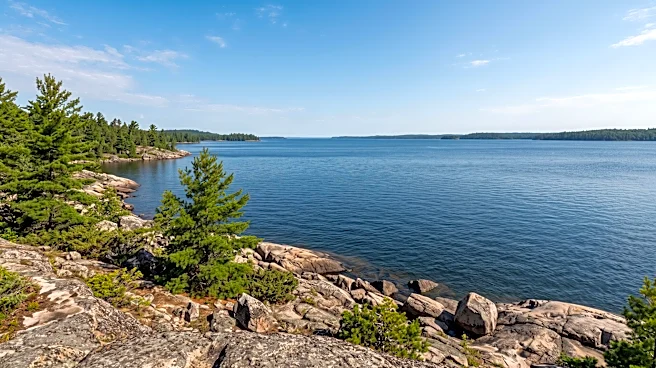
The Great Lakes represent the largest freshwater system globally and are crucial to Michigan's economy, identity, and long-term prosperity. Designating the Great Lakes Commission as a Regional Ocean Partnership within NOAA would significantly expand opportunities for the region to access existing federal funding. This funding is vital for strengthening research, coordination, and conservation efforts necessary to protect the Great Lakes. The current NOAA program administers four Regional Ocean Partnerships across the Northeast, Mid-Atlantic, Gulf, and West Coast, but the Great Lakes region has historically lacked such a designation. This bill aims to level the playing field, ensuring the Great Lakes receive their fair share of federal support, which is essential for safeguarding this indispensable resource for future generations and the communities that rely on a healthy Great Lakes ecosystem.
What's Next?
The Regional Great Lakes Partnership Act, having been introduced in the House and with companion legislation advanced in the Senate, will now proceed through the legislative process. The next steps involve committee hearings, potential amendments, and votes in both chambers of Congress. If passed by both the House and Senate, the bill would then be sent to the President for signature to become law. The designation of the Great Lakes Commission as an official Regional Great Lakes Partnership would lead to increased federal investment and enhanced coordination for research and conservation initiatives across the Great Lakes basin. This could result in more robust environmental protection programs and economic benefits for the surrounding states.
Beyond the Headlines
This bipartisan effort underscores a broader recognition of the ecological and economic significance of the Great Lakes, transcending typical political divides. The collaboration between representatives from both parties highlights a shared commitment to environmental stewardship and regional economic stability. Beyond immediate funding, this designation could foster a more integrated approach to freshwater resource management, potentially serving as a model for other critical inland water systems. It also reflects a growing understanding that environmental health is directly linked to economic well-being and community resilience, prompting a shift towards proactive conservation strategies rather than reactive measures. The long-term implications include not only ecological preservation but also sustained economic growth and improved quality of life for millions of Americans in the Great Lakes region.