





What's Happening?
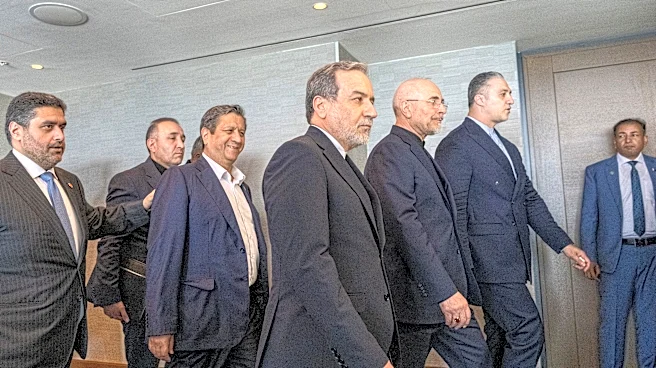
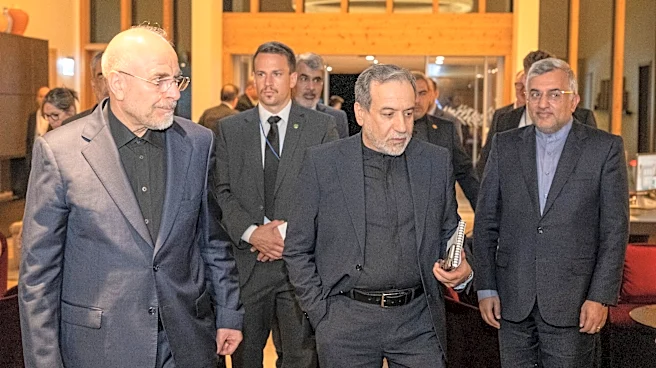
President Trump has defended a memorandum of understanding (MoU) signed between the United States and Iran, aimed at ending the US-Israeli conflict with Iran. The MoU, which includes provisions such as reopening the Strait of Hormuz and ending the US naval
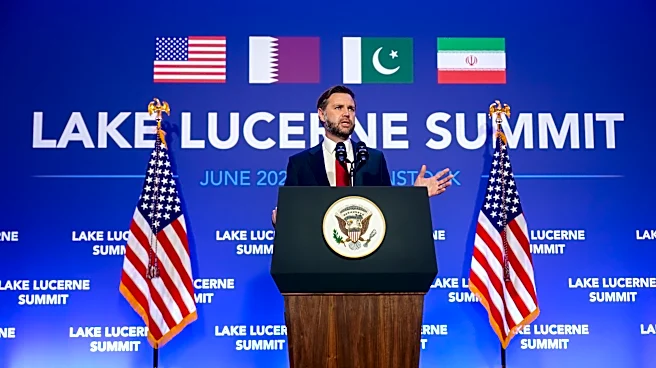
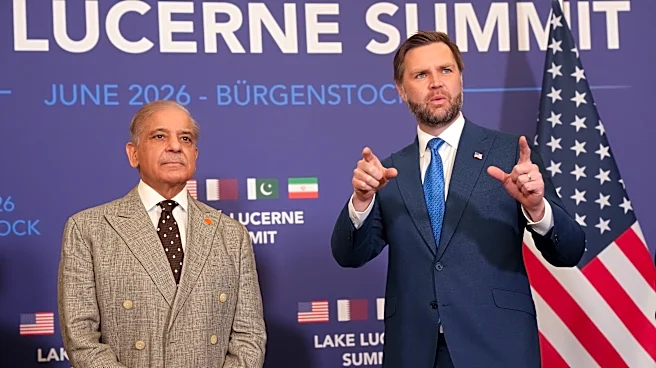
blockade on Iran's ports, has faced criticism from both Democrats and some Republicans. The situation has been further complicated by the cancellation of US Vice President JD Vance's planned trip to Switzerland for negotiations, raising doubts about the MoU's longevity. President Trump has asserted that the MoU represents Iran's 'unconditional surrender' and has criticized those who claim Iran is in a better position now than before the conflict.
Why It's Important?
The MoU between the US and Iran is significant as it represents a potential diplomatic breakthrough in a long-standing conflict. However, the delay in negotiations and ongoing criticism highlight the challenges in achieving a lasting peace. The agreement's provisions, such as lifting sanctions on Iran's fossil fuel industry and a proposed $300 billion reconstruction plan, have sparked debate over their implications for US foreign policy and regional stability. The outcome of these negotiations could impact US-Iran relations, regional power dynamics, and the global energy market.
What's Next?
The next steps involve navigating the 60-day negotiation period outlined in the MoU, during which key issues such as Iran's nuclear program and the administration of the Strait of Hormuz will be discussed. The US and Iran will need to address these complex issues to solidify the agreement. Additionally, the US must manage its relationship with Israel, as ongoing military actions in Lebanon could further complicate the situation. The international community will be watching closely to see if a new ceasefire in Lebanon holds and if the MoU can lead to a sustainable resolution.