





What's Happening?
The Gates Foundation has launched a coalition involving 60 organizations, including major AI labs like Anthropic, Google, and OpenAI Foundation, to enhance the accessibility of artificial intelligence in underrepresented languages. This initiative aims
to reach over 3 billion people within five years by coordinating existing efforts to build more representative language datasets for AI tools. The foundation emphasizes that this work is crucial for combating global inequality, as many communities are currently excluded from the benefits of AI due to language barriers. The coalition seeks to address the 'original sin' of AI tools being predominantly trained on unrepresentative internet data, which often leads to cultural and linguistic biases. For instance, a mistranslation could occur where a pregnant Malawian woman's phrase 'water has broken' is directly translated to 'thrown away water' in English, highlighting the critical need for accurate and culturally sensitive language data.
Why It's Important?
This coalition is important because it addresses a fundamental limitation in current AI development: the lack of diverse and representative language datasets. By focusing on underrepresented languages, the initiative aims to unlock AI's potential for humanitarian applications, particularly in poor communities globally. Improved language accessibility in AI can lead to significant advancements in health outcomes, educational tools, and agricultural practices for small farmers. The current reliance on internet-scraped data has created AI systems that are not culturally diverse, perpetuating biases and limiting their utility for a vast portion of the world's population. This effort seeks to rectify these imbalances, ensuring that AI benefits are distributed more equitably and that the technology can effectively serve a wider range of human needs, rather than being confined to a few dominant languages and cultures.
What's Next?
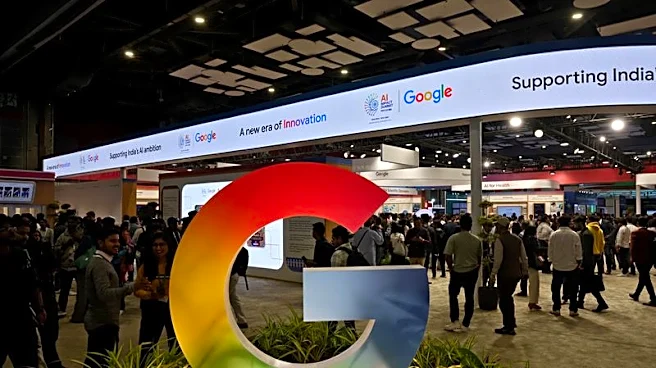
The coalition is currently finalizing details regarding its governance, with a secretariat planned to track the commitments of each signatory. The Gates Foundation may intervene to fill larger gaps in efforts as needed. Member organizations are already undertaking specific projects; for example, Google is funding Project Vaani to collect over 150,000 hours of audio across India to gather speech data on various dialects. Anthropic, another member, is working with the foundation to accelerate vaccine development and improve its chatbot's dataset for local crops, acknowledging the current lag in many African languages. These coordinated efforts are expected to lead to the development of more inclusive and effective AI tools, with the goal of making a tangible impact on global inequality within the next five years.
Beyond the Headlines
Beyond the immediate goal of expanding language accessibility, this initiative touches upon deeper ethical and cultural implications of AI development. The recognition that AI's 'original sin' lies in its unrepresentative training data highlights the inherent biases that can be embedded in technology if not consciously addressed. By actively seeking to gather data from diverse linguistic and cultural contexts, the coalition is promoting a more inclusive and equitable future for AI. This approach not only improves the functionality of AI tools but also fosters cultural preservation and understanding by ensuring that local dialects and cultural nuances are accurately represented. The long-term shift could lead to AI systems that are not just technologically advanced but also culturally intelligent, capable of nuanced interaction and support across a global spectrum of human experience.